
Bethesda's Legacy of World Design: A Player's Perspective on Iconic Exploration
Bethesda games and exploration deliver immersive, captivating worlds where curiosity is rewarded, making every adventure unforgettable and engaging.
As a long-time player immersed in the vast digital landscapes crafted by Bethesda and its associated studios, I find myself reflecting on what makes these worlds so uniquely captivating. It’s not just about the quests or the combat, but the profound sense of discovery that defines the experience. From a nameless prisoner to a prophesied hero, the journey of empowerment is intrinsically tied to the spaces we explore. The company, alongside studios like Arkane, has consistently delivered worlds that reward curiosity, making exploration the true heart of their games. In 2026, this design philosophy remains a benchmark, even as the industry evolves.
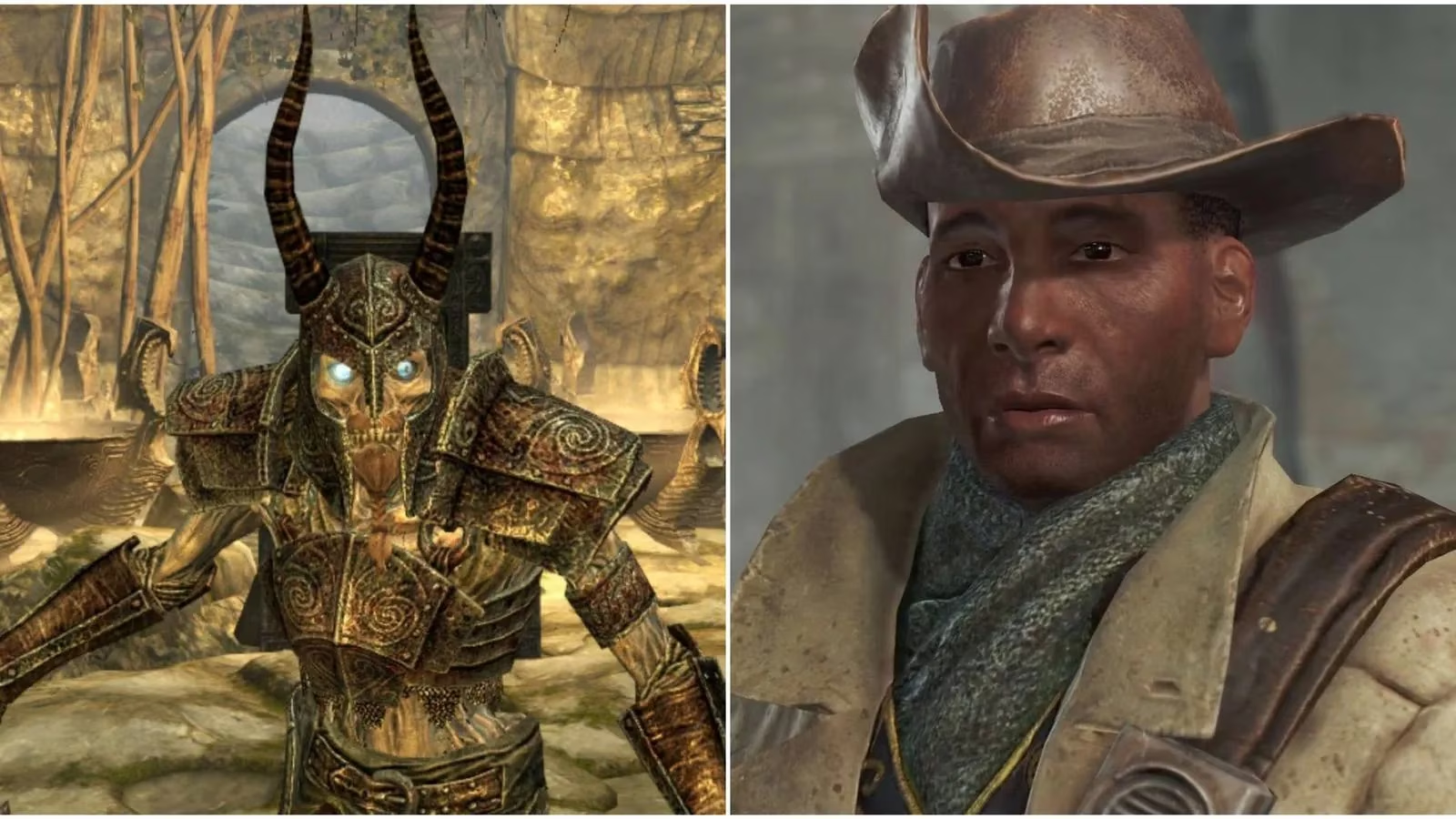
Let’s start with the latest major release, Starfield. I understand the criticisms—the reliance on procedural generation for planets and frequent loading screens can feel like a step back. However, focusing solely on that misses the point. When you commit to exploring its handcrafted worlds, Bethesda's core strengths shine through. These sci-fi environments are breathtakingly beautiful and densely packed with narrative and environmental detail. Yes, the scale prioritizes quantity, but within that are pockets of incredible quality. For players willing to engage deeply, investing hundreds of hours in this universe is a genuinely rewarding experience. It’s a different flavor of exploration, but one that still carries the studio's DNA.
Rewinding to the foundations, Fallout 3 was a revelation. Bethesda's first foray into the post-apocalyptic franchise was a masterclass in environmental storytelling. Exploring the Capitol Wasteland was, and still is, an absolute joy. The world was filled with bizarre, unforgettable secrets that made every corner worth investigating. I’ll never forget stumbling upon a man slowly turning into a tree or discovering a settlement built around an undetonated nuclear bomb. These "magical moments" are what defined the experience. The clunky combat was easily forgiven because the world itself was the main character, compelling you to keep moving forward to see what strange story awaited over the next radioactive hill.
The recent remaster of The Elder Scrolls IV: Oblivion has been a wonderful homecoming. Returning to Cyrodiil's lush, vibrant forests and rolling hills offers a refreshing contrast to the familiar, frostbitten peaks of Skyrim. While later games refined the formula, there's a unique wonder to Oblivion's exploration. Its cities felt grand and lived-in, and its dungeons, though sometimes repetitive in layout, held a certain sinister charm. The world feels expansive and inviting, proving that Bethesda's ability to craft a compelling fantasy landscape was already in top form.
Now, Fallout 4. I acknowledge the debates about its simplified RPG mechanics, but from a pure exploration standpoint, the Commonwealth is in a league of its own. The central quest to find your son is just the thread that pulls you into a world teeming with danger and intrigue. The ever-present threat of the Glowing Sea creates a tangible sense of risk, making you carefully consider every expedition. This tension is perfectly balanced by the safe havens of Diamond City and the anarchic charm of Goodneighbor. These locations aren't just quest hubs; they are vital respites, making the dangerous exploration outside their walls feel all the more consequential and rewarding.
It’s not just the flagship titles. Bethesda's publishing arm has brought us gems like Indiana Jones and The Great Circle. A game about archaeology has to get exploration right, and this title delivers spectacularly. From the opening sequence that recreates the iconic boulder chase to globetrotting across Vatican City and Peru, the locations are breathtaking. The quest design is intrinsically linked to these environments, pushing you to investigate every clue and solve puzzles that feel authentic to Indy's world. It’s a brilliant example of how compelling exploration can drive a narrative forward.
For the purists, The Elder Scrolls III: Morrowind remains the gold standard of organic discovery. This is old-school exploration at its finest. There are no convenient map markers guiding your every step. Instead, you must listen carefully to NPCs' directions, make your own notes, and truly navigate the world. Stumbling upon a hidden tomb or a remote village after following vague clues is an unparalleled reward. This approach demands more from the player but offers a depth of immersion that modern games often streamline away. It’s a testament to a design philosophy that trusts the player's intelligence and curiosity.
We also can't overlook the contributions of studios under the Bethesda umbrella. Arkane's Prey is a masterpiece of environmental design and exploration, set entirely within the haunting, art-deco corridors of the Talos I space station. From the moment you break the initial simulation, you are alone in a beautifully crafted, terrifyingly hostile environment. The station is a puzzle box, encouraging—no, demanding—that you inspect every nook and cranny. Exploration here is directly tied to survival and progression, as resources and secrets are hidden everywhere. Using the Gloo Cannon to create new paths or mimicking objects to sneak through vents makes exploration an active, creative process. Talos I is a world that feels truly systemic, where your understanding of the space is key to mastering the game.
And of course, we arrive at The Elder Scrolls V: Skyrim. Even now, in 2026, it stands as the quintessential Bethesda experience. Its genius lies in its openness and lack of restraint. You are never funneled too aggressively; the world simply exists, waiting for your story to unfold within it. The iconic soundtrack transforms a simple trek across the tundra into an epic journey. Sure, you might find one too many similar-looking draugr caves, but this is offset a thousand times over by the sheer number of handcrafted vistas and unique locations. Cresting a hill to see the College of Winterhold shrouded in aurora, or discovering the hidden beauty of Blackreach for the first time—these are moments of pure gaming magic that few other developers can consistently replicate.
What Truly Defines Bethesda-Style Exploration? 🤔
Looking across these titles, several key pillars emerge that define this unique approach to game worlds:
-
Environmental Storytelling: History and narrative are embedded in the landscape, from pre-war skeletons in Fallout to ancient Dwemer ruins in Skyrim.
-
Player Agency: The path is never singular. You are encouraged to go "off the road" and are consistently rewarded for it.
-
Reward for Curiosity: Checking that distant tower or that suspicious cave usually leads to a unique item, a compelling side story, or a breathtaking vista.
-
Atmosphere & Scale: Worlds feel vast and possess a distinct mood, aided by legendary soundtracks that make traversal an event in itself.
In an era where many open-world games feel like checklists on a map, the Bethesda philosophy—honed over decades and exemplified by titles from Morrowind to Starfield—remains vital. It’s a philosophy that builds worlds not just as backdrops for action, but as the primary source of adventure and wonder. As a player, that’s a legacy worth celebrating and an experience I continue to seek out, hundreds of hours later.
0 Comments