
From Endless Grinds to Bite-Sized Bliss: Why Short Games Are Having a Moment in 2026
Gaming fatigue with marathon-length games is fueling a remarkable resurgence of short games, offering players a focused, impactful experience that perfectly fits modern lifestyles.
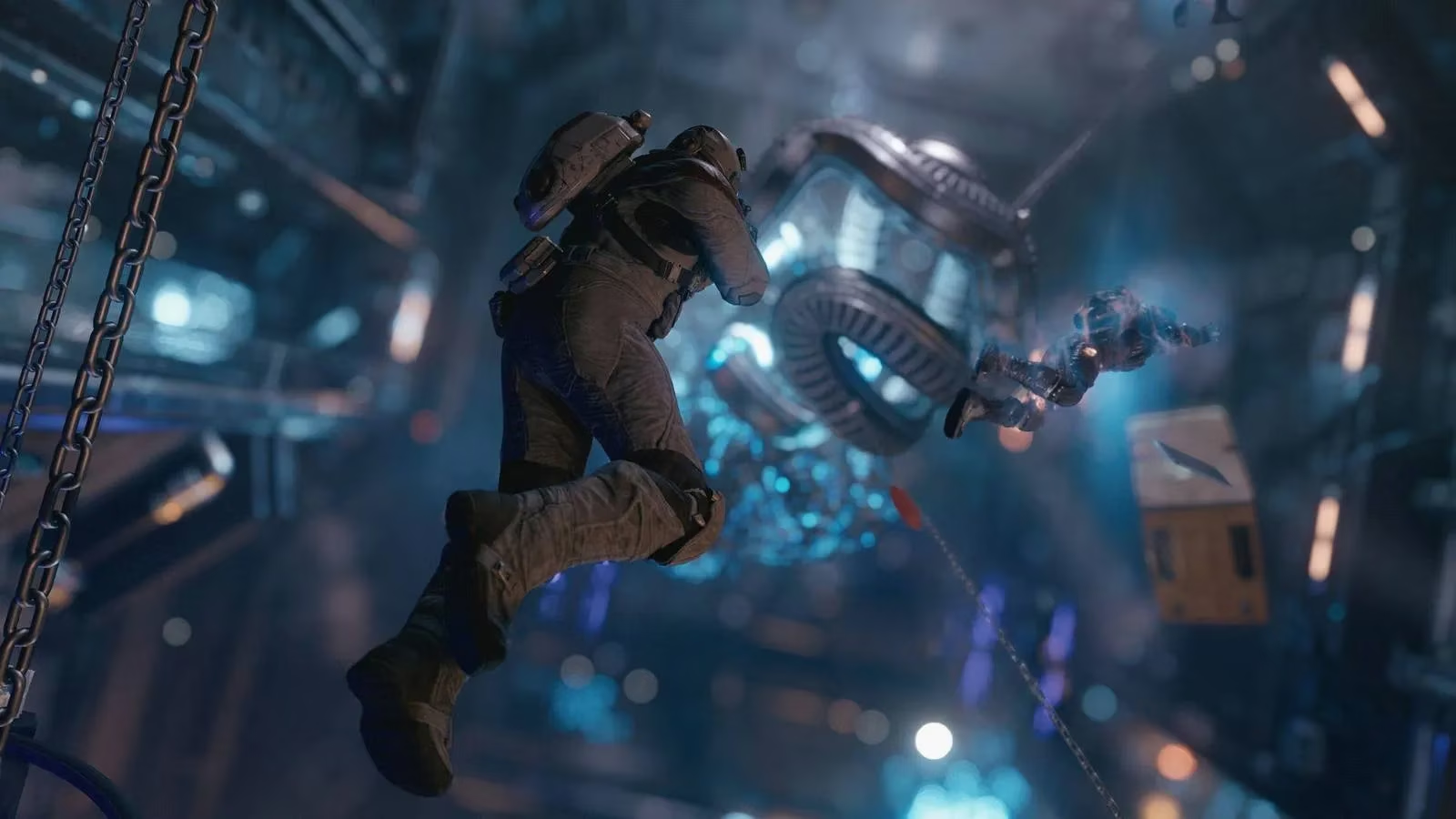
Remember when the biggest selling point for a game was that it could last forever? I sure do. I spent hundreds of hours in Skyrim's frozen tundras and Fallout's irradiated wastelands, chasing radiant quests that promised endless play. But lately, my gaming habits have shifted dramatically. I just don't have the time—or frankly, the energy—to dedicate to those sprawling, 100-hour epics anymore. It seems I'm not alone. According to Will Shen, former lead quest designer on Starfield, players are experiencing a real sense of fatigue with marathon-length games, and it's fueling a whole new trend.
Shen, in a recent interview, pointed out a fascinating shift in the gaming landscape. He believes a "large section or growing section of the audience is becoming fatigued at investing 30-plus, 100-plus hours into a game." This isn't about quality; it's about the sheer time commitment required. We all have lives, jobs, and other hobbies competing for our attention in 2026. The idea of starting a game that demands a second-job level of hours can feel more daunting than exciting.
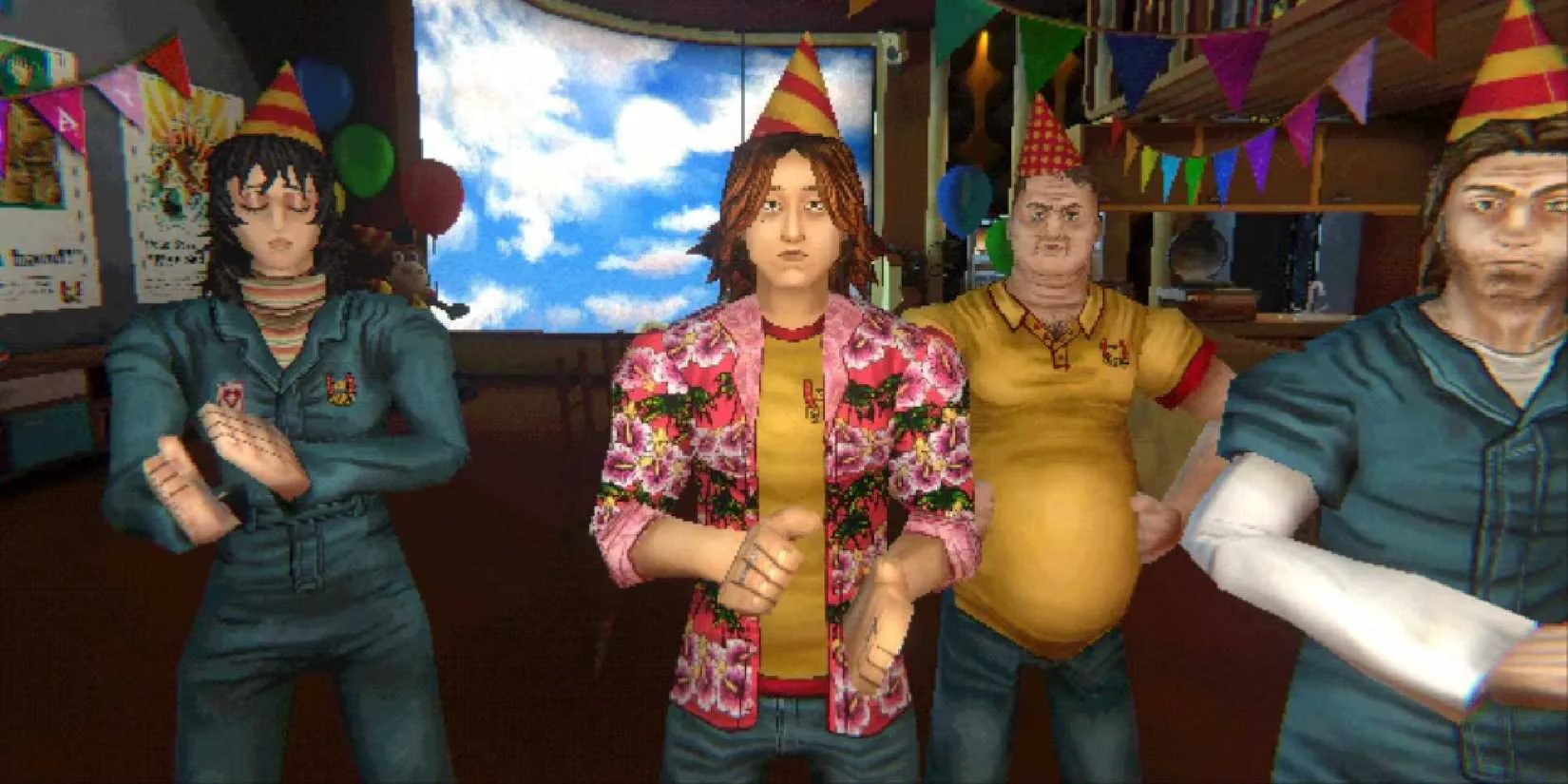
This fatigue, Shen argues, is directly linked to the "resurgence of short games" we're witnessing. He uses the massive success of Mouthwashing as a prime example. "Mouthwashing is a huge hit because it's short," he stated. While execution and presentation matter, its concise length is its superpower. Imagine if it were bloated with side quests and filler content—it simply wouldn't resonate the same way. Its brevity creates a focused, complete experience that players can fully engage with and discuss as a community.
And he's so right! Think about the short games that have captured our collective imagination recently:
-
Slay The Princess (2023): A mind-bending narrative you can experience in a single, intense sitting.
-
Unpacking: A zen, wordless story told through organizing belongings across a lifetime.
-
Citizen Sleeper: A deeply atmospheric RPG that delivers a powerful story without overstaying its welcome.
-
The Forgotten City: A brilliant time-loop mystery that respects your time.
These games prove that emotional impact and depth aren't tied to playtime. A short game can leave a lasting impression precisely because it's a concentrated dose of creativity. You get the full arc, the complete vision, without the grind. It's the difference between a sprawling novel series and a perfectly crafted short story—both are valuable, but the latter fits perfectly into a busy modern life.
Now, this isn't to say the era of big games is over. Far from it! Live service titans and massive open worlds are still hugely popular. Games that are designed to be your primary hobby still have a massive audience. But the ecosystem is diversifying. There's a clear and growing space for experiences that offer a different value proposition: intensity over endurance, focus over breadth.
As a player in 2026, I find myself curating my playtime more intentionally. I might have a live-service game I dip into with friends, but I'm actively seeking out these shorter, narrative-driven gems to fill the gaps. They feel like a breath of fresh air—a complete journey I can start and finish within a week, leaving me satisfied rather than overwhelmed.
So, what does this mean for us? It means more choice, more variety. Developers are recognizing that not every game needs to be a bottomless pit of content. Sometimes, the most powerful thing you can do is tell a tight, compelling story and then let it end. The success of these shorter titles is a welcome reminder that in gaming, as in life, quality of time spent often trumps sheer quantity. And honestly? I'm here for it. My backlog thanks me, and my free time has never felt more rewarding. 🎮✨
0 Comments