
How STALKER 2's Gritty Narrative Exposes Starfield's Storytelling Weakness
STALKER 2: Heart of Chornobyl and Starfield reveal a masterclass in atmospheric storytelling versus a universe lacking consequence. The haunting depths of The Zone showcase impactful quests and player agency, starkly contrasting with Starfield's disconnected, inconsequential activities.
It's 2026, and the gaming landscape has settled, but the echoes of past releases still offer profound lessons. My recent dive into the haunting, irradiated depths of STALKER 2: Heart of Chornobyl wasn't just a return to The Zone; it was a masterclass in atmospheric storytelling that cast a harsh, revealing light on a much bigger 2023 title. While the bugs that once plagued STALKER 2 are long patched, its core experience has relentlessly reminded me of what Bethesda's ambitious space epic, Starfield, ultimately lacks. Sure, they're worlds apart—one a claustrophobic, mutant-infested hellscape, the other an infinite cosmic frontier—but in how they handle quests, NPCs, and player agency, the comparison is unavoidable and, frankly, damning for the latter.
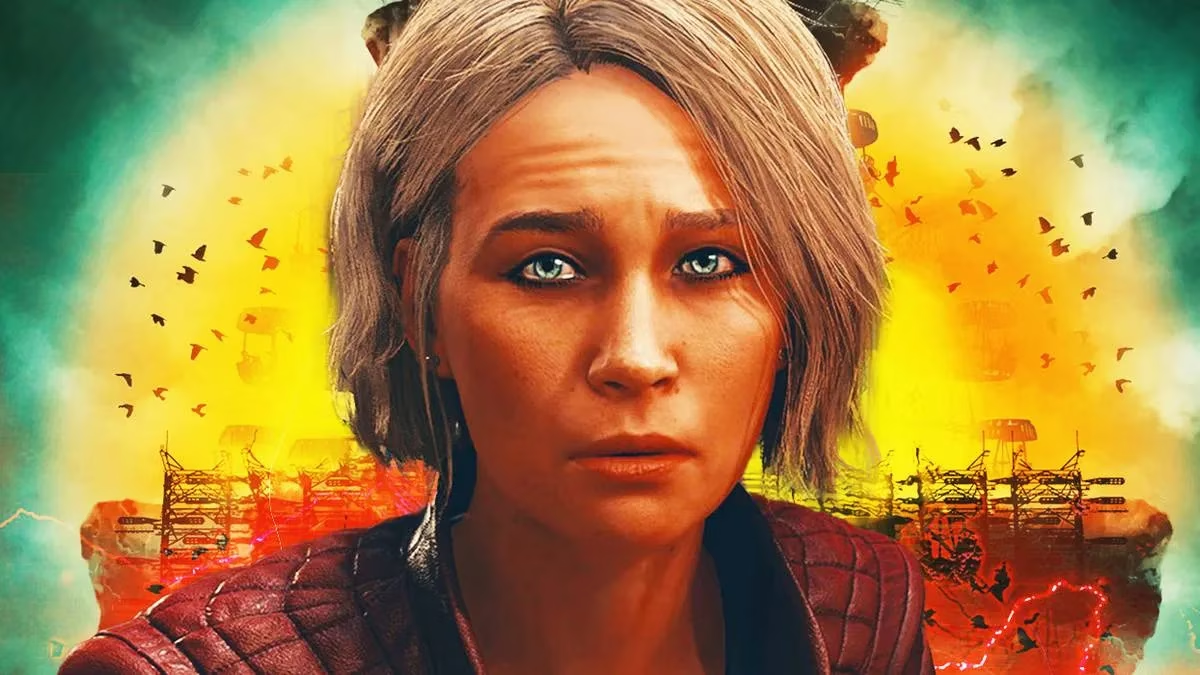
Let's cut to the chase: Starfield's biggest flaw isn't its loading screens or its procedural planets. It's the shocking lack of connective tissue. The game is packed with activities, but they feel like isolated bubbles floating in the vacuum of space. You might stumble upon a genuinely cool side quest like "Operation Starseed," where you literally recruit historical figures (Amelia Earhart, anyone? 😮). But once it's over... poof. It vanishes from the universe's memory. The stakes in these missions feel inconsequential. Sure, the main plot talks about the fate of all reality, but my actions as the player? They rarely ripple beyond the immediate quest log completion. I've saved colonies, brokered peace treaties, and uncovered cosmic secrets, yet the Settled Systems feel perpetually static, indifferent to my deeds.
-
Starfield Quests: Often brilliant in isolation ("Mantis," "Juno's Gambit") but feel disconnected from the wider world.
-
The Result: A universe that feels vast but oddly empty of consequence. You're a tourist, not a participant.
Contrast this with the grim, oppressive reality of STALKER 2. I've spent objectively less time in The Zone than among the stars, yet every minute has weight. The game throws you into the Lesser Zone and later, a place literally called Garbage (mood 😅). Even this starting area is dense with purpose. You're not just clearing checklists; you're surviving, uncovering stories, and making choices that stick.
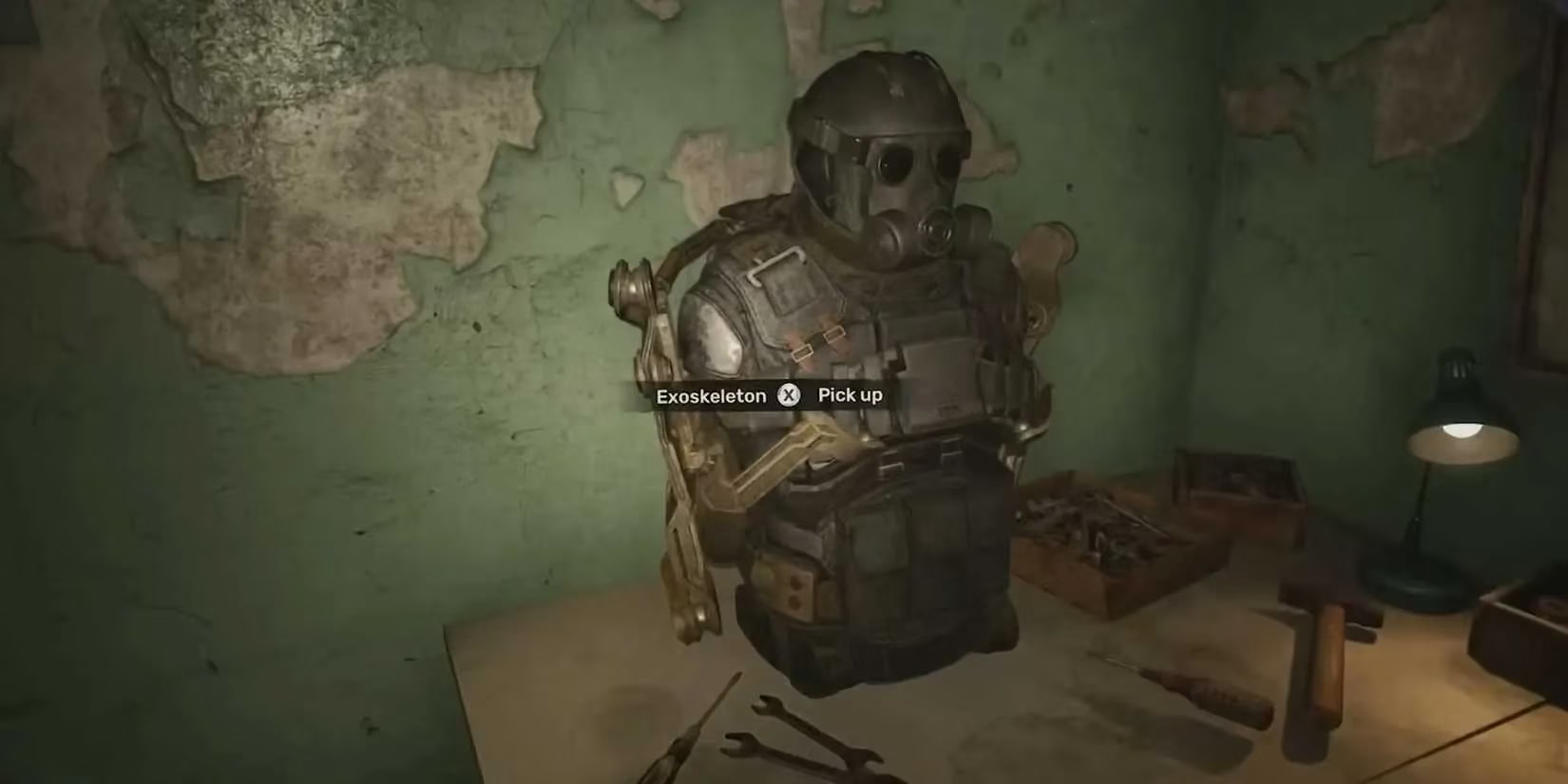
Take a simple side quest chain. You track a ravaged group of Stalkers in "The Lost Boys," explore a spooky cave (getting jumped by a mutant, of course 💀), and hunt for lost stashes marked by those tantalizing blue exclamation points. Each small task isn't a chore; it's a piece of a larger, grimy puzzle. They chain together naturally, leading you deeper into The Zone's secrets and conflicts. The main quest is deceptively simple—you lost an artifact, go get it back—but the path is everything. How you approach situations, who you help or betray, creates variables that can make your journey radically different from another player's. The autonomy feels real, not artificial.
The narrative density is another key difference. Starfield's NPCs can sometimes feel like dialogue dispensers, info-dumping lore that feels like homework. In STALKER 2, discovering the lore is something I wanted to do. It's baked into the environment, the muttered conversations between bandits, the notes on corpses. The stakes are immediate and personal: a character might die, a faction's standing might shift, a brutal piece of the world's history is revealed. Pushing moral boundaries in this wasteland is a core, compelling part of the experience.
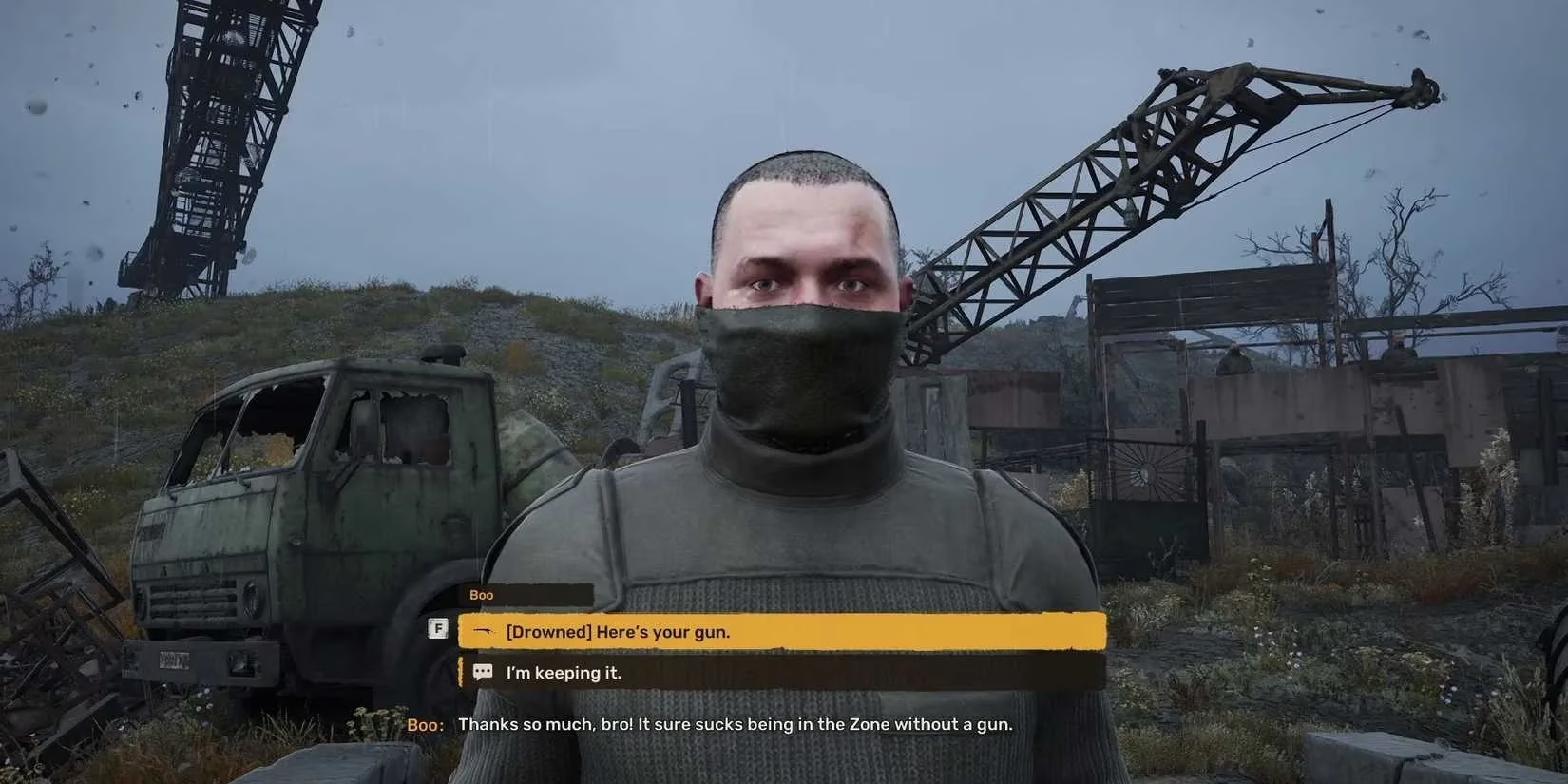
This brings us to the heart of the matter: player drive. In Starfield, you're often commanded to do a random task on a random planet for a convoluted reason to achieve a goal somewhere else. The drive is external, transactional. In STALKER 2, the drive is internal and environmental. The gritty, in-your-face stakes of survival compel you forward. You complete missions not just for the reward, but to understand—to discover what caused the savage result waiting for you. The storytelling is environmental, emergent, and deeply immersive.
Even the protagonists highlight this gap. Starfield's hero, despite all the customization, often feels like an emotional blank slate, poorly fleshed out from a comprehensive emotional perspective. Meanwhile, STALKER 2's Skif is a seemingly nameless, faceless stalker with a mysterious past, yet I felt more connected to his struggle for survival and answers than I ever did to the fate of the Constellation. The Zone itself is the character, and you are irrevocably part of it.
So, what's the verdict in 2026? STALKER 2, with its handcrafted desolation, has shown that scale is meaningless without substance. A smaller, denser, and more reactive world where every bullet, every choice, and every mutated howl in the dark matters will always trump a vast, beautiful, but ultimately sterile universe. Starfield promised the stars but forgot to give us a compelling reason to reach for them. STALKER 2, covered in mud and radiation, simply hands you a Geiger counter and a desperate purpose, proving that sometimes, the most compelling journeys are the ones where you can feel the ground—or the toxic waste—beneath your boots.
0 Comments