
Starfield's Future: Why a Prequel Could Save Bethesda's Space Epic
Starfield's ambitious space-faring IP faces challenges post-launch, but a compelling prequel could revitalize its universe by exploring the untapped 'Wild West' era of human pioneers.
Starfield's journey since its 2023 launch has been a complex one for Bethesda. Initially hailed as "Skyrim in space," the game struggled to meet the colossal expectations set by its fantasy predecessor. Players expressed disappointment with what they perceived as an empty universe and a narrative that failed to capture the magic of Tamriel. Despite efforts to expand the game's universe, including the release of the Shattered Space DLC in 2025, Starfield continues to face significant challenges. Bethesda's recent silence on the game's future has only amplified the uncertainty, leaving many to wonder: what's next for this ambitious space-faring IP? Could the key to revitalizing Starfield lie not in moving forward, but in looking back?
The Case for a Starfield Prequel
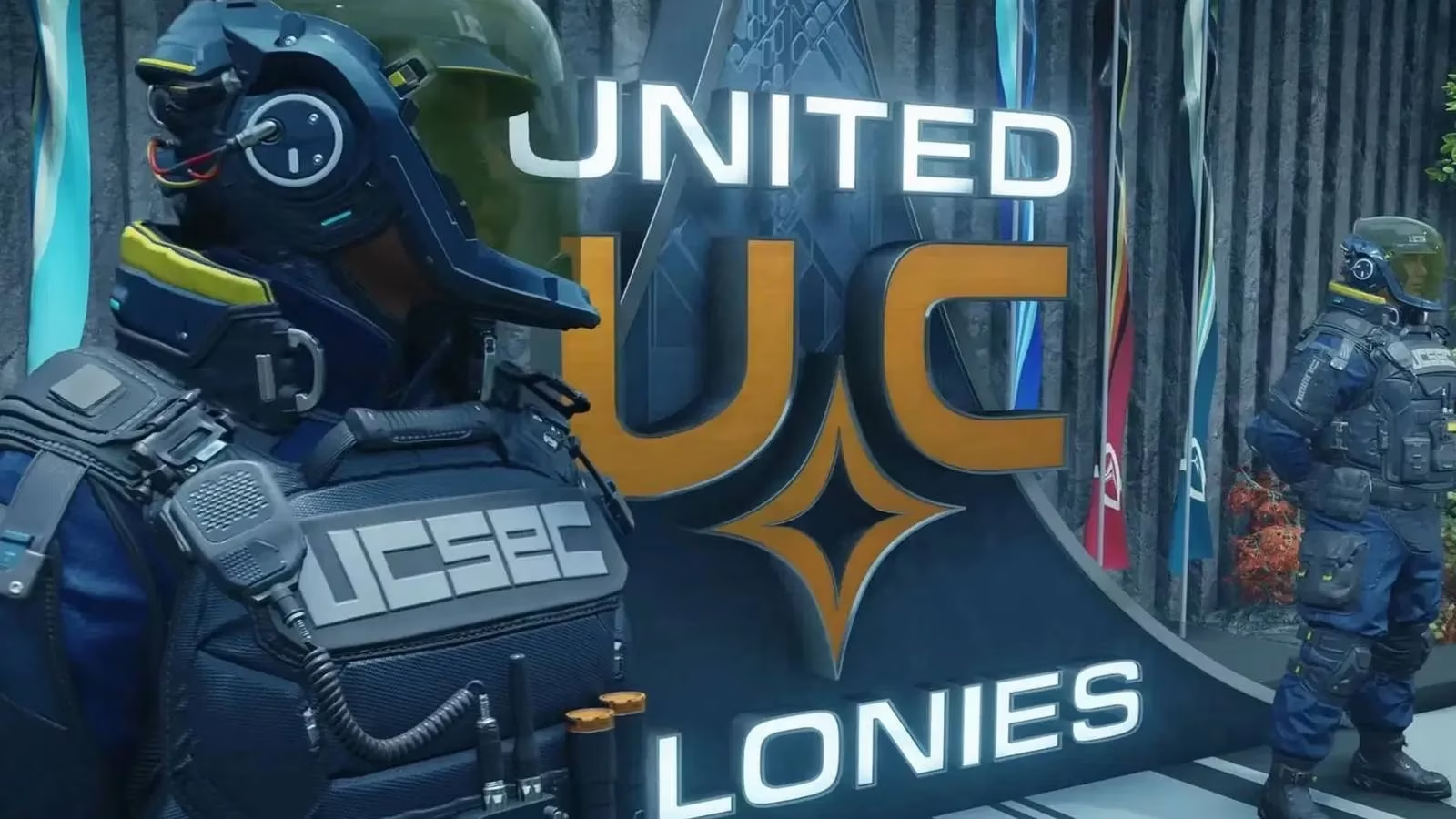
The lore established in Starfield's base game provides a rich, untapped foundation for a compelling prequel. The game's history tells a fascinating story of human resilience. Faced with the impending destruction of Earth, humanity united under the banner of the United Colonies in 2159. The following year, 2160, marked a pivotal moment: the first colony ship landed on Jemison, the future heart of the United Colonies and home to the glittering capital of New Atlantis. Isn't it intriguing to consider exploring this era firsthand, rather than just reading about it in data slates?
A prequel set during these formative years could address many of the criticisms leveled at the original game. Instead of exploring a galaxy already settled and bureaucratic, players could step into the boots of the first pioneers. Imagine being part of the initial landings in the Alpha Centauri system, a time when every planet was a true frontier. This setting would naturally foster a sense of discovery, danger, and consequence that some found lacking in the vast, established Settled Systems of the main game.
The "Wild West" of Space: A New Gameplay Paradigm
What would this prequel actually play like? Think less polished metropolis and more rugged frontier outpost. The core gameplay loop could shift dramatically:
-
🗺️ True Exploration: Charting unknown worlds without the safety net of established starports or cities.
-
🔨 Foundation Building: Helping to construct the very first settlements that would eventually grow into places like New Atlantis or Akila City. Your choices could influence the architectural style, economy, and even the faction allegiances of a future major hub.
-
⚔️ Uncharted Dangers: Encountering alien ecosystems and environmental hazards without a century of colonial research to guide you. Survival would be a constant concern.
This premise injects a "Wild West" edge into the hard sci-fi framework. It's a story about hope, struggle, and the raw optimism of building a new home among the stars—a narrative layer that could add profound depth to the entire franchise's lore. After all, doesn't the story of how something was built often prove more compelling than simply inheriting the finished product?
The Current State of Starfield and Future Content
As of 2026, the roadmap for Starfield remains unclear. The post-launch plan initially hinted at yearly expansions, but the mixed reception to both the base game and Shattered Space has cast doubt on that schedule. The community is rife with speculation, including unconfirmed rumors of a second DLC potentially titled 'Starborn.' However, with no official word from Bethesda, these rumors remain just that.
The developer's quiet period suggests a period of reevaluation. The upcoming Xbox Games Showcase presents a potential venue for a new announcement, but will it be another story expansion, or something more fundamental? Given the circumstances, would a bold, standalone prequel experience be a more strategic move than trying to extend a story that has already struggled to captivate?
Why a Prequel Makes Sense in 2026
From a development and narrative perspective, a prequel offers distinct advantages for Bethesda:
| Aspect | Benefit of a Prequel |
|---|---|
| Narrative Freedom | Unshackled from the Constellation storyline, it can tell a wholly new tale of survival and founding. |
| World Design | Can focus on creating a few densely packed, hand-crafted frontier worlds instead of relying on procedural generation for scale. |
| Gameplay Innovation | Introduces mechanics like base-building from the ground up, resource scarcity, and diplomatic first contact with alien species (even if non-sentient). |
| Loyalty to Lore | Deepens the existing Starfield universe without retconning or complicating the established main story. |
| Market Position | Offers a fresh entry point for players who were hesitant about the original, framed as a new beginning. |
Conclusion: A Galaxy of Potential
Starfield may not have achieved the sky-high orbit Bethesda hoped for, but its universe is far from barren. The historical groundwork is solid, evocative, and begging to be explored. A prequel focusing on the gritty, hopeful, and dangerous early days of the United Colonies could recapture the sense of wonder and adventure that defines the best of Bethesda's RPGs. It could transform Starfield from a game remembered for its unrealized potential into the first chapter of a sprawling, beloved saga. As the community waits for news, one question lingers: will Bethesda choose to build forward, or will they find greater success by building backward, to the very foundation of their stellar dream?
0 Comments