
Starfield's Missing Soul: How the Absence of Radiant AI Makes Its Universe Feel Empty
The Elder Scrolls 4: Oblivion Remastered outshines Starfield with its immersive Radiant AI system, highlighting Starfield's static, lifeless NPCs.
In the vast, starry expanse of Bethesda's game library, a curious regression has occurred. The recent release of The Elder Scrolls 4: Oblivion Remastered in 2025, with its fresh coat of paint, has inadvertently cast a stark, unflattering light on the studio's 2023 space epic, Starfield. While Starfield boasts over a thousand planets and a NASA-punk aesthetic that screams ambition, it's missing a core ingredient that made its predecessors feel like living, breathing worlds: the Radiant AI system. This isn't just a missing feature; it's the missing heartbeat of a virtual society.
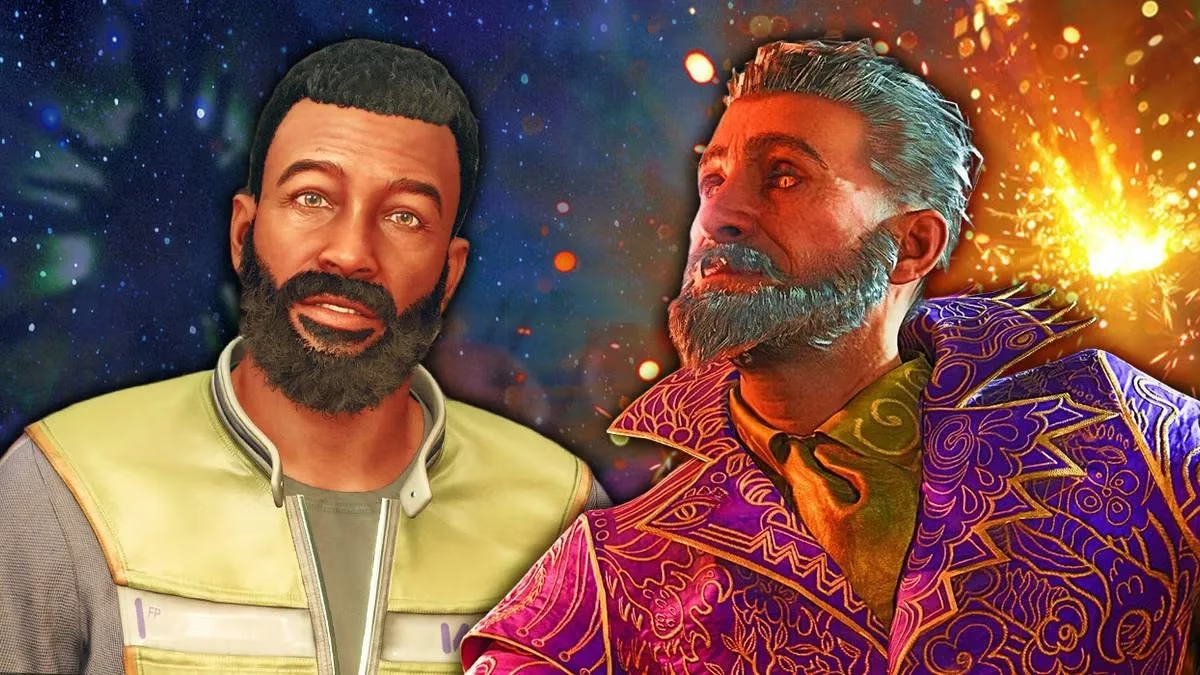
Back in 2006, Oblivion pioneered Bethesda's Radiant AI. This system was a game-changer, literally. It gave every non-player character (NPC) a purpose beyond standing around waiting for the player. They had schedules: they woke up, worked, ate, prayed, socialized, and slept. Cyrodiil felt like a real province because its people had lives of their own. This philosophy became a staple, defining the immersive sandboxes of Fallout 3, Skyrim, and Fallout 4. Fast forward to Starfield, and that signature hum of daily life has been replaced by... well, a whole lot of quiet wandering.
The Settled Systems' Static Population
Walking through the gleaming corridors of New Atlantis or the neon-soaked streets of Neon, you're surrounded by people. But if you stop and look—really look—you start to notice something's off. These NPCs, for all their detailed character models, are kinda just... there.
-
The 24/7 Convenience Store Universe: The most glaring example? Shops never close. Need a spaceship part at 3 AM on a planet with a 50-hour day? No problem, the merchant is always at their post. It's convenient for the player, sure, but it completely shatters any illusion of a functioning society. There's even a popular mod that had to add closing times—fans literally patching in the basic reality that was a given in a 2006 game.
-
NPCs Without a Home: In Oblivion, almost every named character had a bed to return to. In Starfield, many NPCs in major cities seem to be eternal vagrants, perpetually milling about with no apparent home or nightly routine. They become background noise, set dressing rather than citizens.
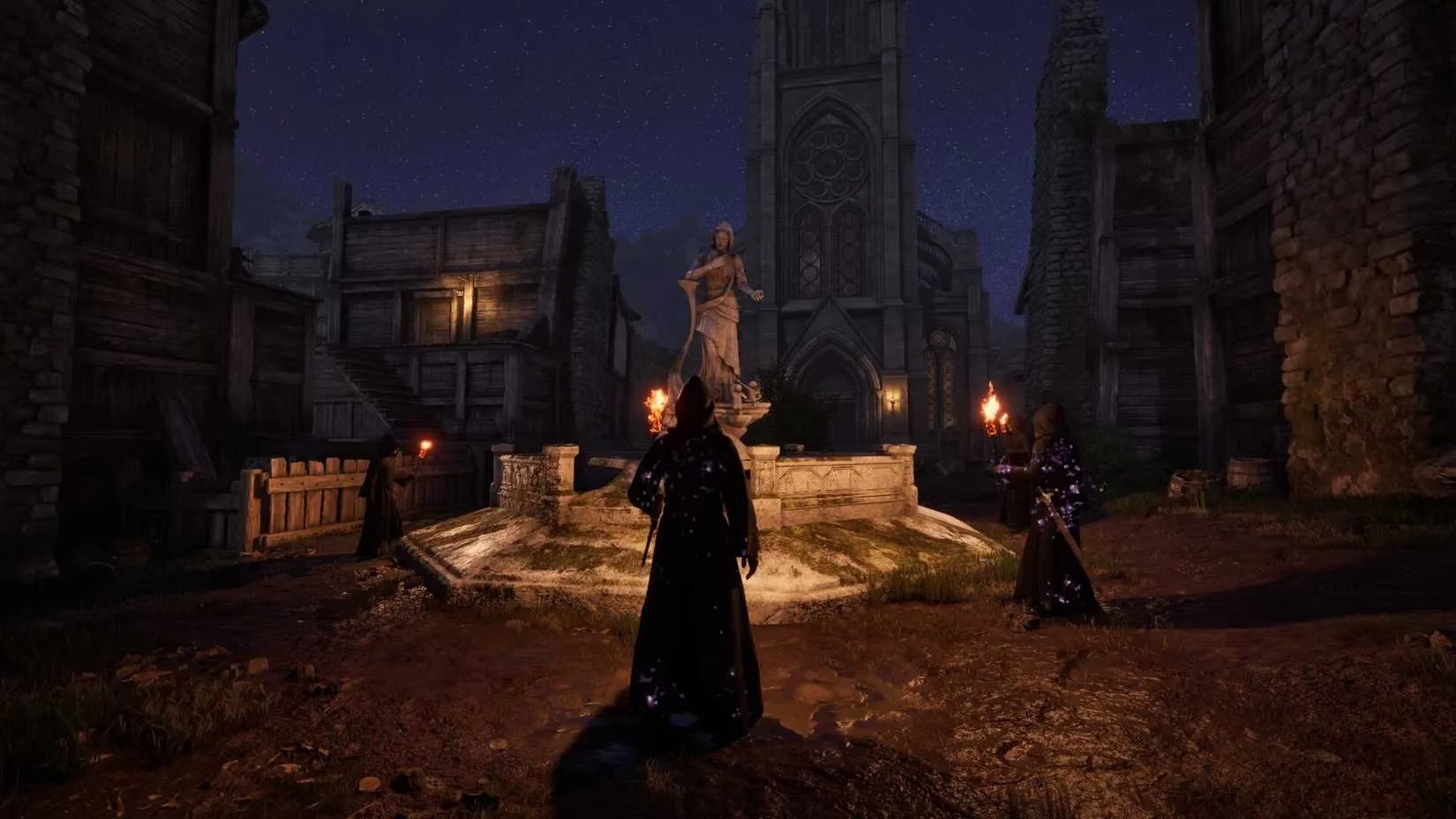
Why Cyrodiil Still Feels More Real Than Space
Oblivion Remastered might be quaint with its single province, but wow, does it feel tangible. Visit the Imperial City at midnight, and the streets are deserted except for the night watch and the occasional insomniac. You can creep into homes (not that you should!) and find people asleep in their beds. This creates an undeniable rhythm and immersion.
| Oblivion's World | Starfield's World |
|---|---|
| Shops have opening/closing times. | Shops are always open. 🕒 |
| NPCs have homes and sleep schedules. | Many NPCs wander endlessly. |
| Society has a day/night rhythm. | Time is largely irrelevant to NPC routines. |
| Quests can leverage schedules (e.g., a store being closed). | Quest givers are always available. |
The magic of Radiant AI is that it turns the world into a playground of cause and effect. Remember the "Paranoia" quest in Skingrad? You had to tail an elf's neighbors, and you'd find them actually going about their day—praying at the cathedral, working in the vineyard, heading home to sleep. You could do this with almost any character in the game. They weren't just props; they had agency.
The Cost of Ambition
Now, let's cut Starfield some slack. It makes sense, in a way, why Radiant AI was scaled back. With a universe spanning hundreds of planets, each with its own day/night cycle, programming intricate schedules for hundreds of named NPCs would have been a logistical nightmare. The game's sheer scale worked against its depth. It's a classic case of being, you know, too ambitious for its own good.
But here's the rub: even in the places where it could have been implemented—the major hub cities—it's absent. The result is a world that feels gamified in a way a 20-year-old game does not. The further you stray from the critical path of quests, the more the illusion of a living universe breaks down. It starts to feel like a very pretty, very large theme park where the animatronics just walk in circles.

This issue echoes a familiar Bethesda trend. It's a different flavor of the same problem that made Fallout 4 feel less like an RPG than Fallout 3—prioritizing a new, flashy system (like a voiced protagonist) over deepening the core, immersive sandbox mechanics that made their games unique. The studio feels compelled to push the envelope, which is admirable, but sometimes the soul of the experience gets lost in the process.
The great irony is profound. Starfield aims for a grounded, realistic vision of humanity's future, but its characters are puddle-deep. Oblivion Remastered, a nearly 20-year-old game, presents a fantasy world that feels more engaging and believable because its people simply... live. They have beds to sleep in and shops that close for the night. In the end, a thousand planets can feel emptier than one well-lived-in city when nobody there has a life to call their own.
0 Comments