
Starfield's Shattered Space Suffers From the Weight of Bethesda's Chosen One Trope
Starfield: Shattered Space's forced Chosen One narrative limits roleplaying, making House Va'ruun's world feel like a theme park rather than an organic society.
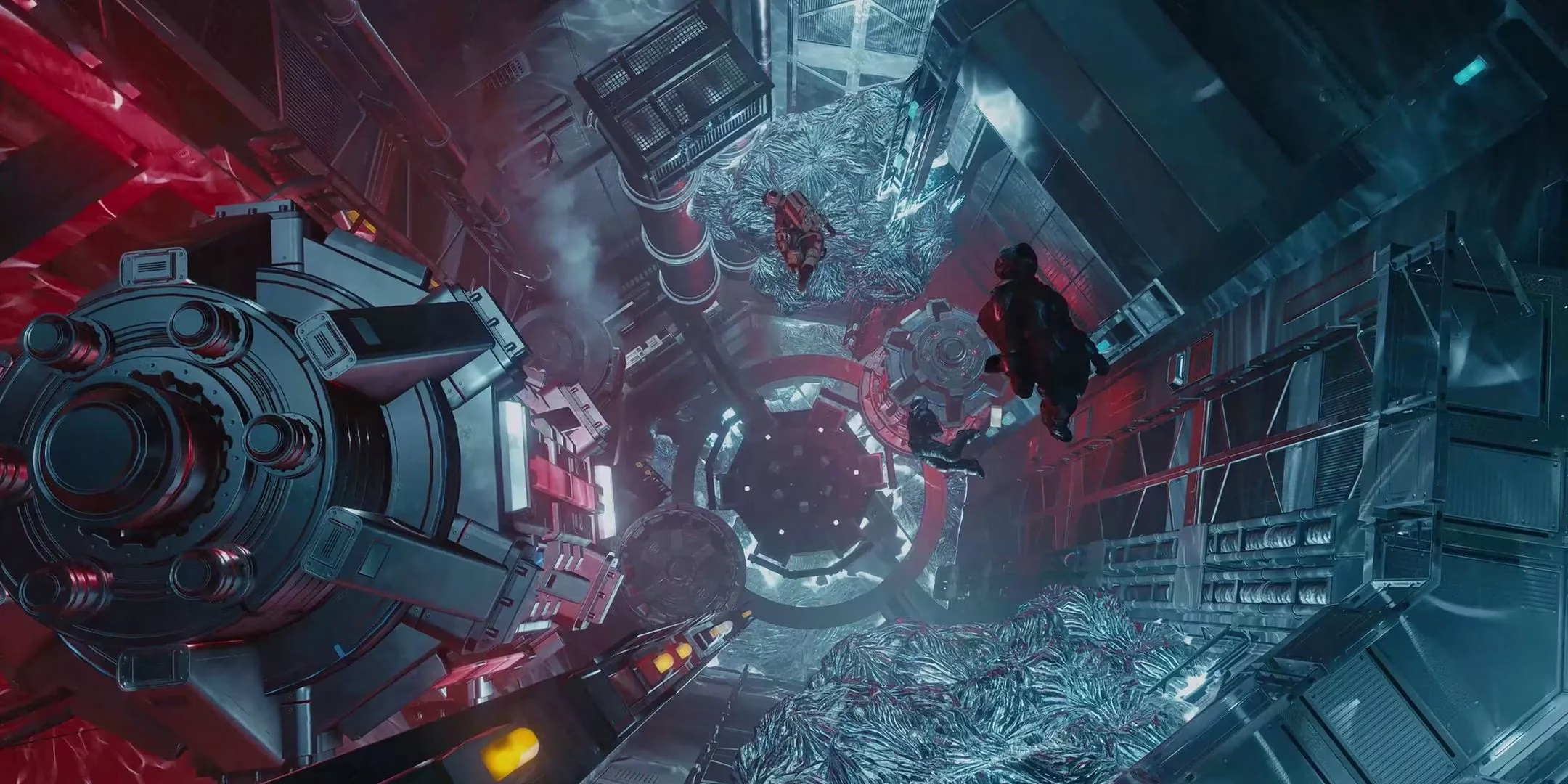
In the cold, silent corridors of a derelict space station, bodies drift like forgotten marionettes, their tethers snapped long ago. This haunting image from Starfield: Shattered Space sets the stage for a story where the player, answering a mysterious distress call from The Oracle, is drawn to the secretive homeworld of House Va'ruun. Yet, within moments of setting foot on Va'ruun'kai, the narrative pivots awkwardly. A complete outsider is suddenly hailed as the prophesied savior of an entire civilization, granted audiences with their high council, and handed the keys to their most sacred mysteries. For many players, this abrupt elevation feels less like an earned trust and more like a theme park operator waving a VIP pass—a jarring intrusion that collapses the fragile architecture of belief.
The so-called "Chosen One" narrative is as familiar to Bethesda's catalog as the creak of a rusted chest opening. In The Elder Scrolls III: Morrowind, released back in 2002, players stepped into the ash-stained boots of the Nerevarine, a reincarnated hero destined to strike down a living god. Skyrim followed in 2011, anointing every wandering prisoner as the Dragonborn, the only soul capable of truly devouring Alduin's immortal spirit. Even the post-apocalyptic wasteland of Fallout 4 wrapped its opening hours around a singular figure, gifting the protagonist a suit of power armor and the singular capacity to resurrect the Minutemen. This lineage pulses strongly through House Va'ruun's hurried acceptance: the player is the sole individual who can perceive the spectral voice of Anasako, an echo of the Listener from Skyrim's Dark Brotherhood. The pattern is so deeply etched into the studio's DNA that it has become a kind of narrative sugar-coating—sweet at first taste, but capable of overwhelming the more savory complexities beneath.
However, when Shattered Space launched, its arrival was met with a cloud of "Mixed" reviews that curled around this very trope. Critics and roleplayers alike lamented a profound curtailment of agency. Being force-fed a destiny within the first hour is like handing a painter a canvas already filled with someone else's masterpiece; no matter how vibrant the pigments they add, the original frame throttles every stroke. In an RPG, where the internal fiction of a character is the primary instrument, such a rigid introductory narrative acts as a short wall around the player's imagination. The world transforms from a lived-in organism into a diorama where every switch is designed for the visitor. Discussions on community platforms turned heated, with one popular sentiment boiling down to a simple complaint: the trope "profoundly limits roleplaying possibilities, eats away at believability, [and] patronises the player." It is the difference between wandering a forest and being placed on a leash at the entrance.
The irony is that this frustration represents a complete reversal of older desires. When The Elder Scrolls IV: Oblivion arrived, a loud contingent of players was actually disappointed that the grand, dragon-birthing prophecy belonged to Martin Septim and not to their own character. They wanted to be the axis upon which the world spun. Decades later, as gaming culture grew more sophisticated in its craving for emergent, player-driven narratives, the same gilded pedestal began to feel like a cage. The Chosen One trope remains a mainstay far beyond Bethesda—threading through Final Fantasy, The Legend of Zelda, Doom, and the original Baldur's Gate—but its reception has fragmented. What was once a comfortable, familiar rhythm now risks sounding like a melody heard too many times, its notes predictable and its emotional range flattened.
Looking at the 2026 landscape, the conversation has only intensified. While Starfield itself offered moments of sandbox freedom where one could ignore the main quest and simply live as a spacefaring nobody, Shattered Space doubled down on the heroic archetype. The game's engine allowed for a whisper of anonymity, but the DLC shouted over it with a pre-written sermon. Other studios have begun experimenting with more nuanced approaches—worlds that treat the player as an opportunist rather than a savior, reacting to deeds rather than birthrights. Bethesda, meanwhile, appears to remain steadfast in its design philosophy, as if reluctant to fully abandon the safety of a formula that once forged legends. The challenge ahead is not to erase the Chosen One entirely but to let the title emerge organically, earned through action rather than bestowed by a lazy script.
Bethesda's stories have long been cathedrals of atmosphere and exploration, places where a random nook can unfold into a hundred-hour obsession. The Chosen One trope, for all its criticisms, can still serve as a powerful anchor when handled with restraint. But the winds of expectation in 2026 blow toward characters who are forged in the fires of player choice, not decreed by an invisible hand. As Va'ruun'kai fades into starlight, the lesson lingers: even the most devoted congregations can grow weary of a prophecy they never chose to speak.
0 Comments