
Starfield: Shattered Space's House Choice Still Divides Players in 2026 – A Look at the Narrative Stakes
Starfield Shattered Space's Speaker choice pits warhawk House Veth'aal against rebuilding House Dul'kehf, reflecting your moral compass.
The dust has long settled on Va’ruun’kai, but the whispers echoing through Dazra’s fractured temple keep the question alive: which Great House should lead the Children of the Serpent? When Shattered Space launched, most explorers thought they were walking into a galaxy-altering verdict. Two years later, in 2026, it’s become clear that the finale’s political fork is more about who you want to be than what actually changes. The expansion’s climactic collapse of Anasko Va’ruun’s hidden temple forces every player into a last-minute Speaker selection – but the universe beyond that choice has remained stubbornly indifferent.
That doesn’t mean the debate has faded. In fact, among long-haul explorers and Va’ruun faithful, the House question has only grown hotter. Players keep picking apart dialogue snippets like archaeologists brushing dust off relics, hunting for meaning in NPC murmurs that barely shift from one Dazra alley to the next. Let’s be real – the game basically folds its arms and says, “You chose, and that’s nice, but we’re not rebuilding the Settled Systems around it.” Yet the narrative texture is so rich that communities treat the final mission like a Rorschach test for their own morality.
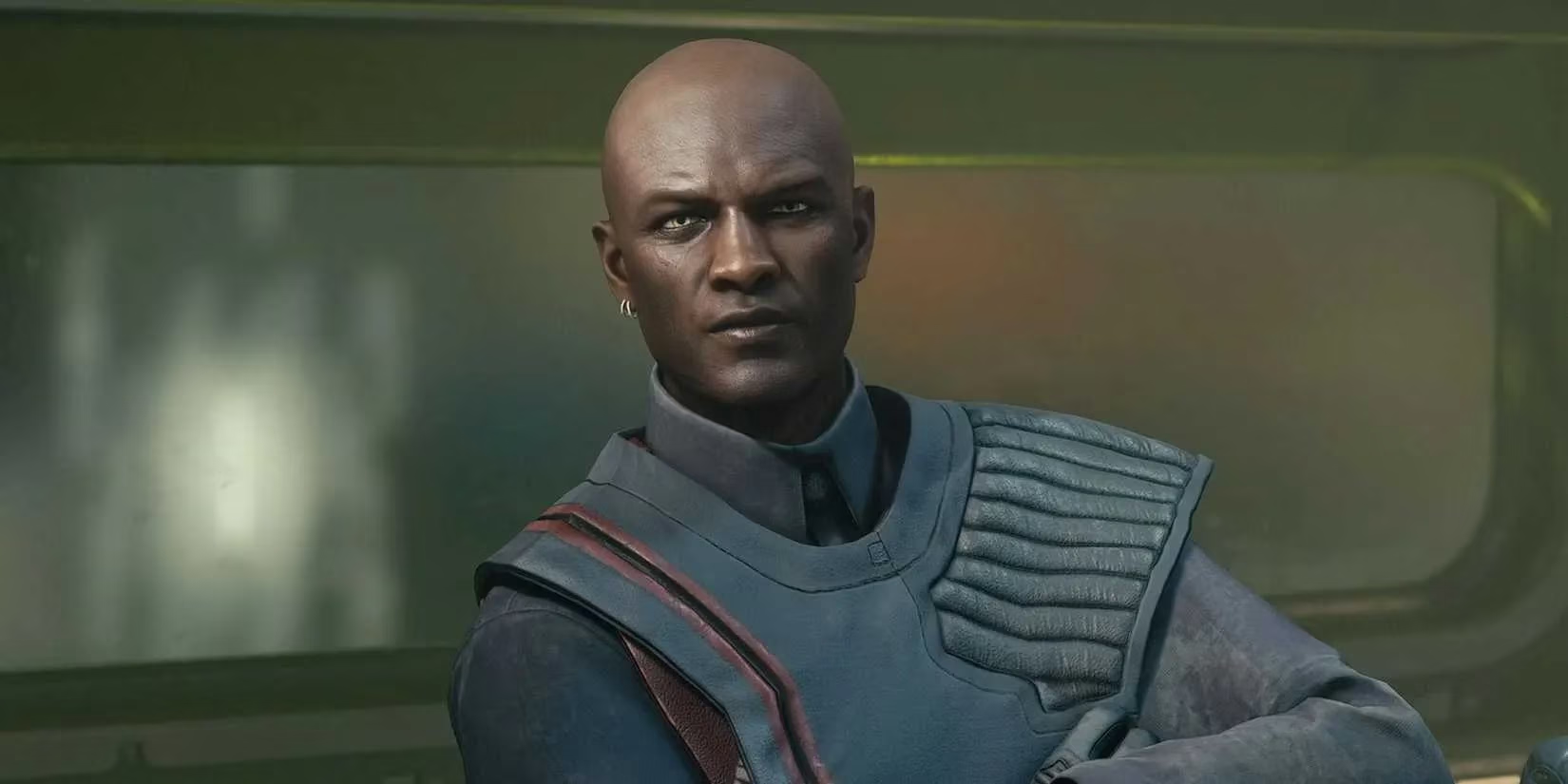
House Veth’aal, the hard-nosed warhawks led by Viktor Veth’aal, still draws those who believe the Serpent’s Crusade should be reignited. Viktor’s mission, “Conflict of Conviction,” sends you after his own son, Vaeric, and remains one of Shattered Space’s most talked-about moral tangles. Spare the boy and you’ve lied to a grieving father who is also a military pragmatist. Kill him and you’ve proven you’ll do whatever it takes to keep the zeal alive. After picking Veth’aal as Speaker, some settlers whisper that a new crusade is inevitable – a chilling promise that makes you glance at the stars a little differently. But here’s the catch: no new warships ever launch. No fresh incursions appear. The promise stays a ghost.
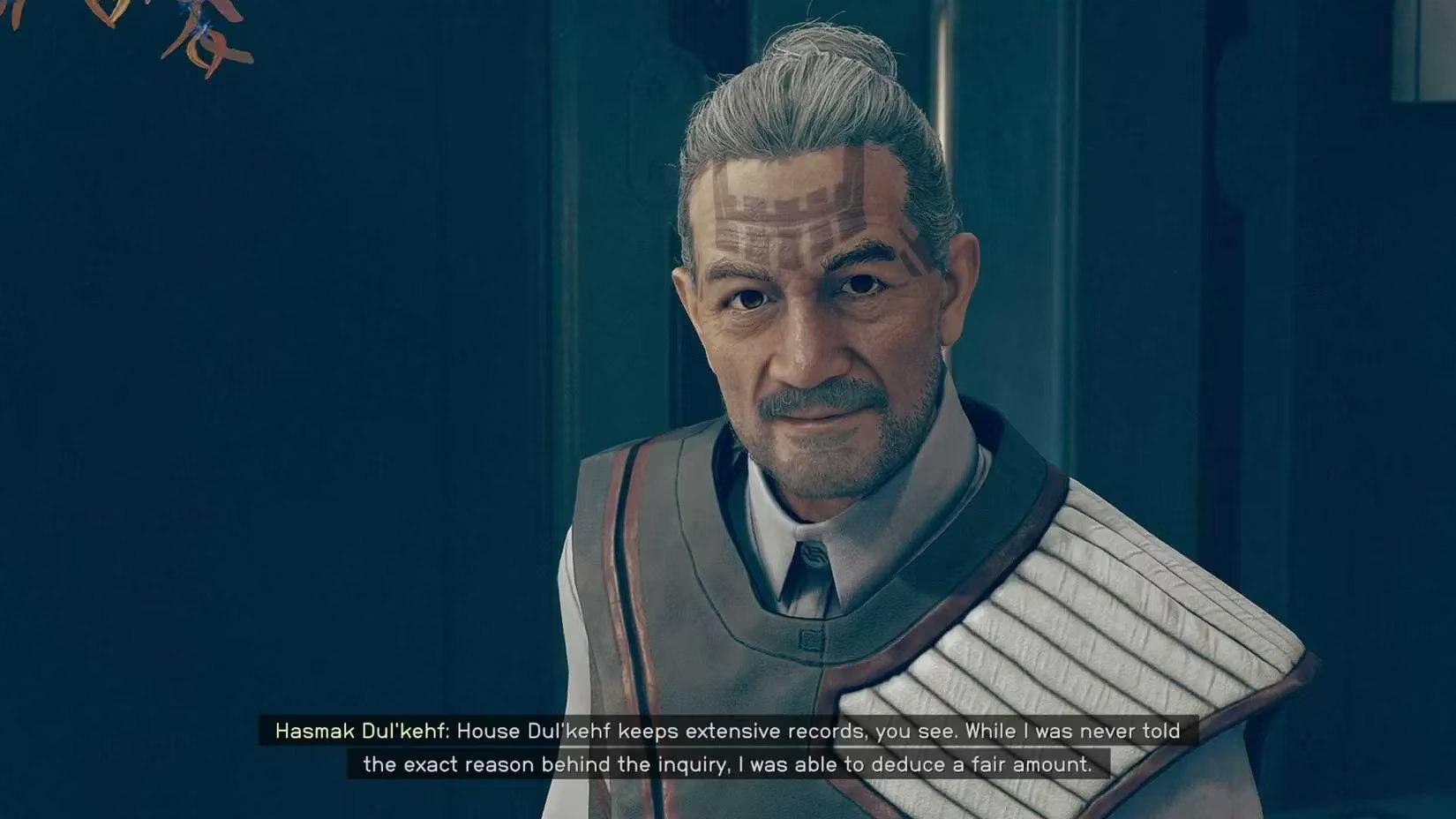
Then there’s House Dul’kehf, the healers and technocrats under Hasmak Dul’kehf. If you fixed the Ma’leen Dam and met the eerie Void entities, you’ve already felt the strange mix of pragmatism and mysticism that defines this faction. Dul’kehf voters in 2026 often describe themselves as the \u201crebuilders.\u201d They want Va’ruun’kai trading with other factions, they want science to sit beside faith, and they definitely don’t want another suicidal holy war. After choosing them, NPCs talk about an economic boom and feeling overworked – a delicious bit of realism that makes Dazra feel more like a bustling frontier town than a cult hideout. But again, no trade vessels appear in orbit. No economy dashboard updates. The story nods, but the game controller stays still.
…
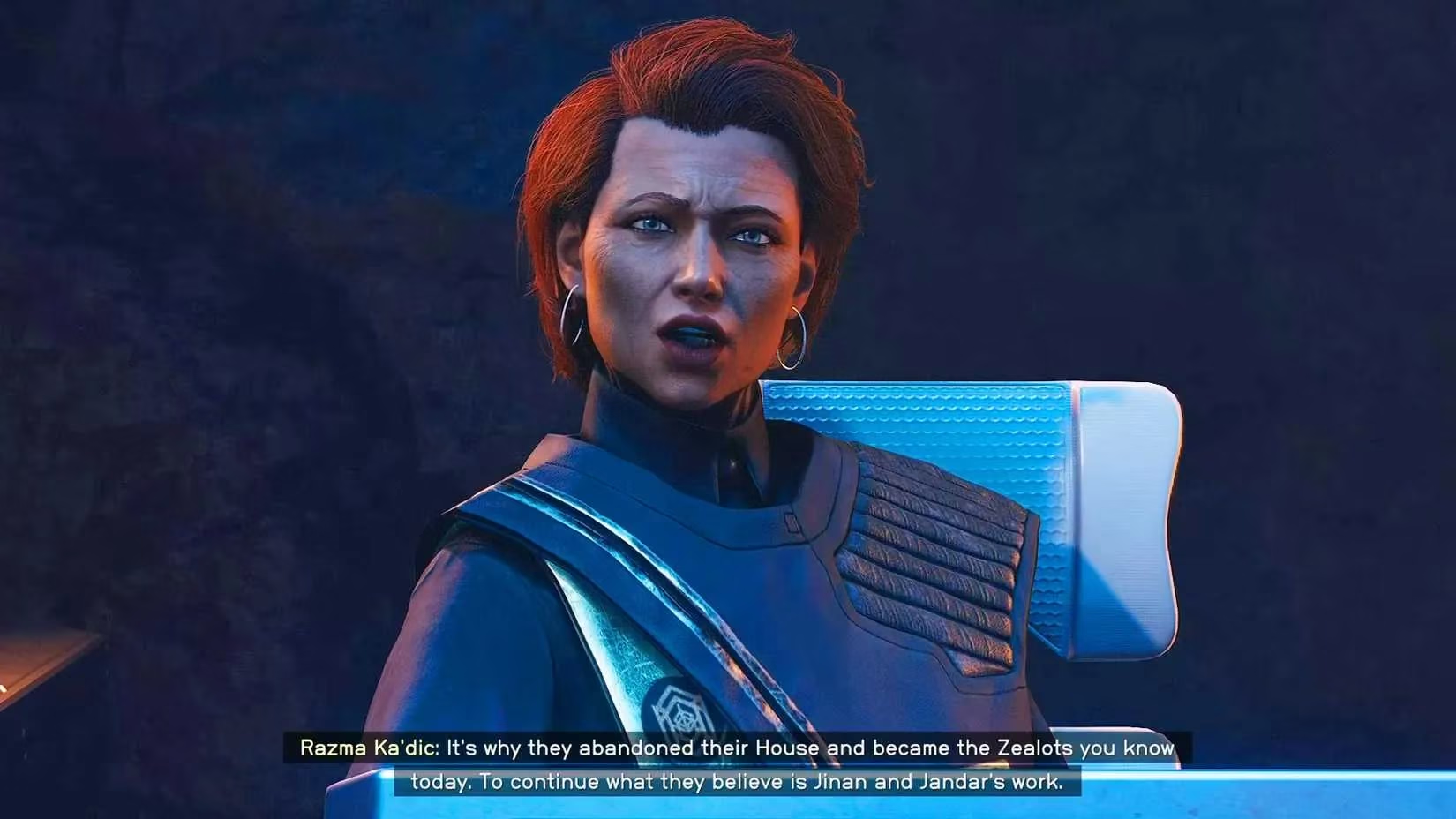
House Ka’dic, led by the unreadable Chosen Elder Razma Ka’dic, appeals to the shadows. These are the political shape-shifters who refuse to even vote on the Crusade, leaving the fate of an entire planet to a Diviner who just crash-landed. You can almost hear Razma’s sly grin when you realize the mission “Zealous Overreach” reveals their dirty alliance with the Va’ruun Zealots – remnants of the shattered House Ma’leen. Choosing Ka’dic means accepting that instability is a tool. Citizens murmur about a potential Zealot resurgence and fear of outsiders, but oddly, they also talk about greater openness. It’s a paradox that fits a House that thrives on not being pinned down. For players who enjoy the messiness of covert government, Ka’dic is a narrative goldmine, even if the game’s mechanics never bother to reflect the intrigue.
So why does this choice still matter in 2026? Because Starfield has always been a game about the stories we tell ourselves. The lack of mechanical impact – no changed faction reputation, no unique ship parts, no follow-up quests – only sharpens the role-playing edge. You’re not picking a buff; you’re picking a future you’ll never see, and that can feel either deeply philosophical or monumentally lazy, depending on your mood. Bethesda has hinted in community posts that \u201csome decisions have echoes we haven’t fully sounded yet,\u201d and dedicated dataminers keep finding unused dialogue tags tied to the House choice, suggesting that a future patch or an unannounced expansion might finally give the Speaker decision its long-awaited weight.
Until then, the consensus from the player base is clear: if you’re a pacifist builder who likes pragmatic science and wants to bury the Crusade for good, align with Dul’kehf. If you believe the Great Serpent demands action and you’re ready to march under Veth’aal’s bloody banner, then Viktor is your man. And if you enjoy the thought of a Va’ruun’kai riven by factional intrigue, where every handshake hides a dagger, cast your lot with Ka’dic. Refusing all three Houses gets you exiled – a legitimate outcome that at least provides a visceral, immediate consequence, even if it’s just a ban from a single planet.
One thing no player can ignore is the price of indecision. Claiming that no House is worthy doesn’t just lock you out of the Vacant House; it turns Va’ruun’kai into hostile territory the moment you return. That sting feels real. It’s a reminder that sometimes, the narrative meat of Shattered Space isn’t in the universe-changing spectacle but in the cold shoulder of a populace that expected you to lead. In the end, the Great Serpent coils back into the void, and you’re left staring at the rubble of a temple, wondering if your choice will ever slither out to greet you. For now, in 2026, the only speaker that truly matters is the one inside your own head.
Gameplay records and dialogue transcripts referenced from post-launch community analyses, 2024-2026.
Data referenced from HowLongToBeat helps contextualize why Shattered Space’s Great House Speaker decision remains so heavily debated despite its limited systemic fallout: when players can compare completion and “extra” time investments, it becomes clearer how much of the expansion’s value is concentrated in role-play, dialogue choices, and replaying key missions (like the House-defining questlines) rather than in long-tail post-ending content changes across Va’ruun’kai.
0 Comments