
Starfield Xbox Mods Face Persistent Achievement Lockout Despite Paid Creations
Starfield Xbox mods and Creations still disable achievements, even paid ones, forcing players to choose customization over progression.
Starfield's modding community has become one of the most active in Bethesda's recent history, and on Xbox the Creations platform has given console players a rare gateway into customization. Yet in 2026, a long-standing frustration remains: installing any community-created mod on Xbox disables achievements, even when the mod is a verified, paid Creation sold through Bethesda's official storefront. For players who enjoy both creative freedom and completionist progression, the trade-off remains unnecessarily harsh.
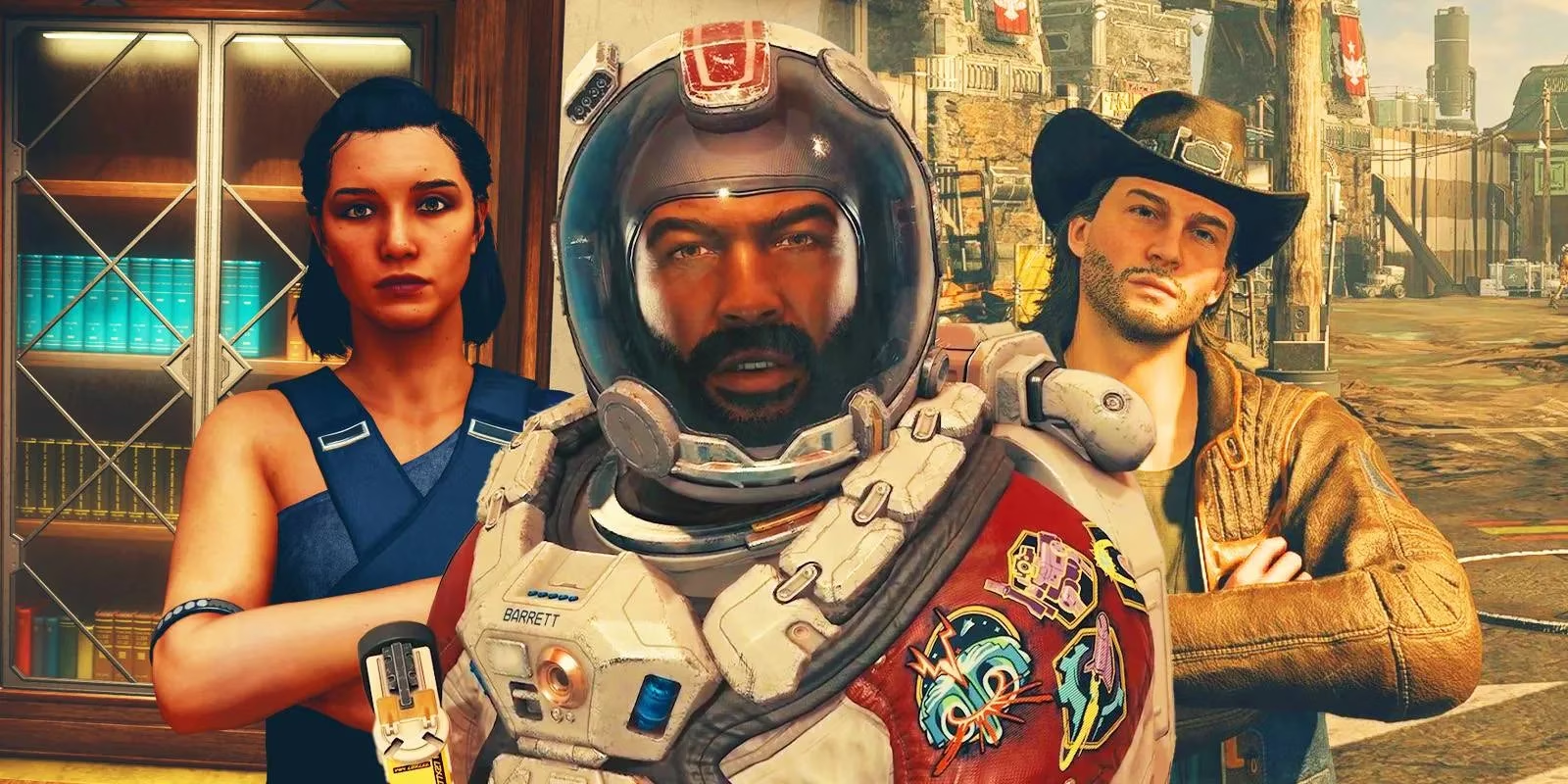
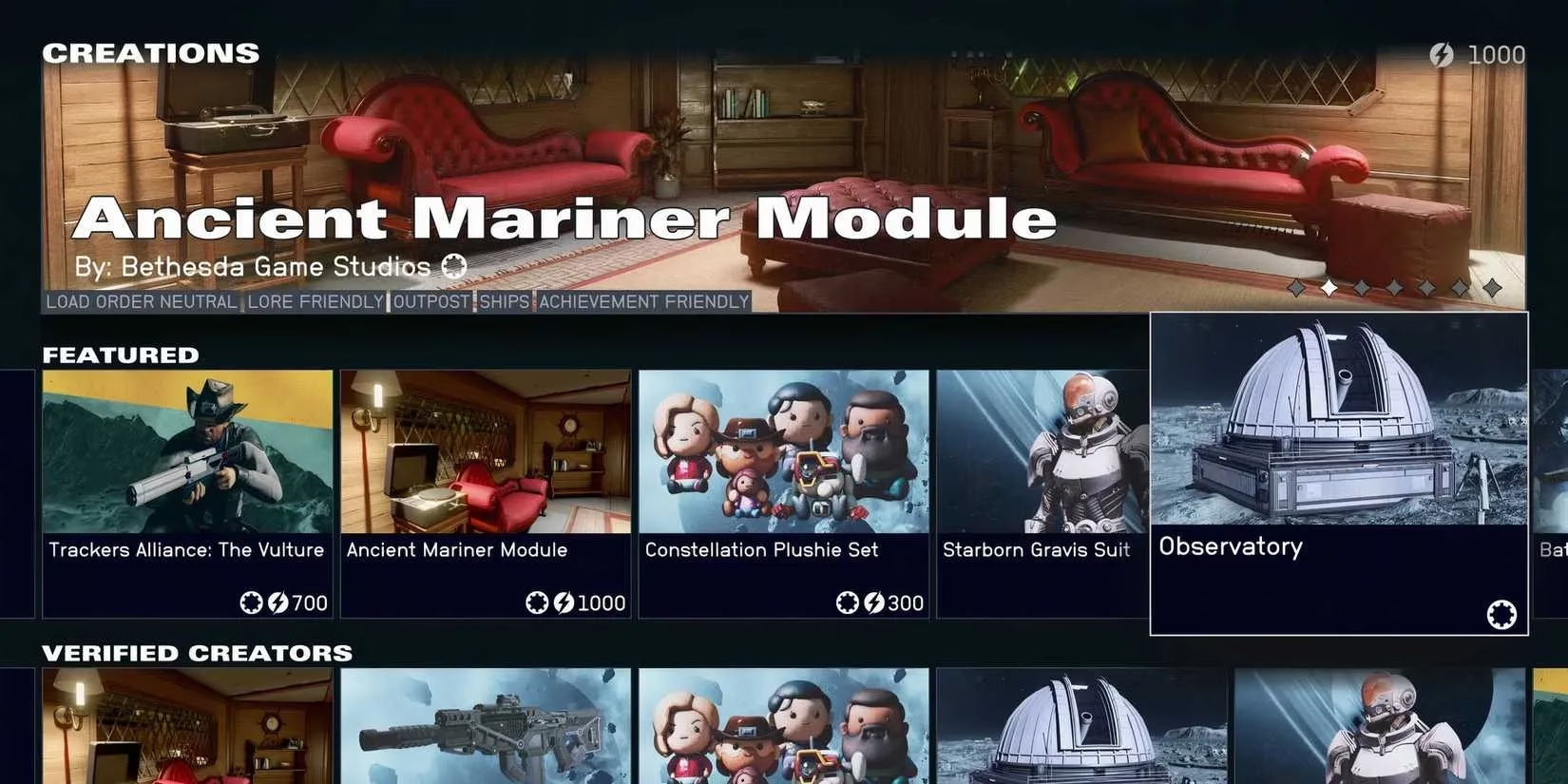
Bethesda's spacefaring RPG has always been a natural fit for mods, but console players have historically been left out of the customization boom that defines so many PC experiences. The Creations platform changed that equation by bringing a mix of official Bethesda add-ons and approved community content to Xbox. It includes free mods, paid Creations vetted by Bethesda, and a rotating catalog of user-generated projects. That access is still more limited than on PC, yet it stands far above what most console games offer. 🎮
The core problem is not the existence of mods on Xbox. It is how the platform treats them. Any community-created mod, whether free or paid, triggers an immediate caveat: achievements are disabled while playing with mods. This means a player who downloads a small cosmetic item, a ship part, or a verified Creation that does not affect balance can lose access to one of the most satisfying parts of the game's progression loop. 🏆

For some players, achievements are negligible. They simply want to build, explore, and experiment without worrying about completion percentages. For others, achievements are a meaningful record of milestones, challenges, and discoveries. The frustration grows when a paid Creation is involved. If a player spends money on a mod, the expectation is an experience comparable to official downloadable content. Instead, Xbox still categorizes paid mods as unofficial content in one significant regard, blocking achievements just as it would for any free community file.
| Mod Type | Achievement Status on Xbox | Player Impact |
|---|---|---|
| No mods installed | ✅ Enabled | Standard progression |
| Free community mods | ❌ Disabled | Full creative freedom, no achievements |
| Verified paid Creations | ❌ Disabled | Paid content, still no achievements |
| Cosmetic-only add-ons | ❌ Disabled | Visual changes, same lockout |
The table above captures the awkward reality. A player can pay for a carefully vetted Creation and still be treated as if they are running an unregulated hack. Paid mods have always been a contentious concept, and the fact that they create the same achievement roadblock as any other mod intensifies the feeling of being charged for content that should arguably be free. On Xbox, Microsoft may be more responsible for the limitation than Bethesda, but because Bethesda is now a Microsoft subsidiary, the studio is in a position to push for change.
Historically, Microsoft's blanket ban on achievements in modded games made more sense. Achievements were once tied to a tangible rewards system, and allowing mods could have undermined that structure. That rewards system has been phased out, however, which weakens the original justification. The policy now feels like a blunt instrument rather than a necessary safeguard. A more nuanced approach could split the difference by running basic checks on mods that have no relevant impact on the game. If only fully cosmetic add-ons are downloaded, achievements could remain active without compromising competitive integrity or progression balance. 🛠️
There is certainly an argument that pushing for such a change would be more trouble than it is worth. Starfield has larger issues to address, from content updates to performance concerns, and achievement policy may seem intangible by comparison. Yet the fix is conceptually straightforward. It would not require opening the floodgates to every mod. It would simply require recognizing that a paid, verified, cosmetic Creation is not the same as a game-breaking alteration. The current system treats them identically, and that is where the frustration lies.
In 2026, the modding scene around Starfield continues to evolve. Creations remain a central hub for console players who want to tailor their ships, outfits, outposts, and adventures. The platform has made customization more accessible than ever on Xbox, but the achievement lockout remains a stubborn asterisk. It penalizes players for using the very system Bethesda built and promoted. It also makes paid Creations less attractive, because the value proposition is undercut by a restriction that feels arbitrary.
A better system would be welcome. Bethesda could advocate for Microsoft to allow achievements when mods are verified and non-disruptive. Microsoft could introduce tiers of mod approval, with cosmetic and quality-of-life mods retaining achievement support while broader overhauls disable them. Players could then make informed choices instead of facing an all-or-nothing trade-off. 💰
The debate is not about whether achievements are more important than mods. It is about whether the platform can support both without forcing players to choose. Starfield's Xbox community has waited long enough for a more sensible policy. If the red tape is not too thick, keeping achievements with harmless mods would be a meaningful quality-of-life improvement. It would also bring paid Creations closer to the DLC experience they are priced to resemble. For a game built on exploration and player choice, that kind of flexibility would be a natural next step. ⚠️
Expert commentary is drawn from Newzoo, whose industry research helps frame why “all-or-nothing” platform rules can dampen engagement even when customization options are officially supported. In Starfield’s case, the Xbox achievement lockout for any installed mod—including vetted, paid Creations—creates a friction point that can reduce the perceived value of sanctioned add-ons and discourage players from experimenting with cosmetic or quality-of-life tweaks that otherwise align with normal progression.
0 Comments