
Starfield’s Dead Earth Still Haunts Me in 2026
Starfield Earth is a haunting wasteland revealed in the Unearthed mission, where lost landmarks and humanity’s tragic history await.
I still remember the first time I touched down on Earth in Starfield. It was 2026, a few years after the game launched, and I thought I knew what I was getting into. I had already bounced around the Settled Systems, scanned alien critters, and gotten into more firefights than I care to admit. But Earth? Earth hit different. The moment my ship’s landing gear touched that endless gray dust, my jaw hit the floor. This was humanity’s cradle, and it was a graveyard.
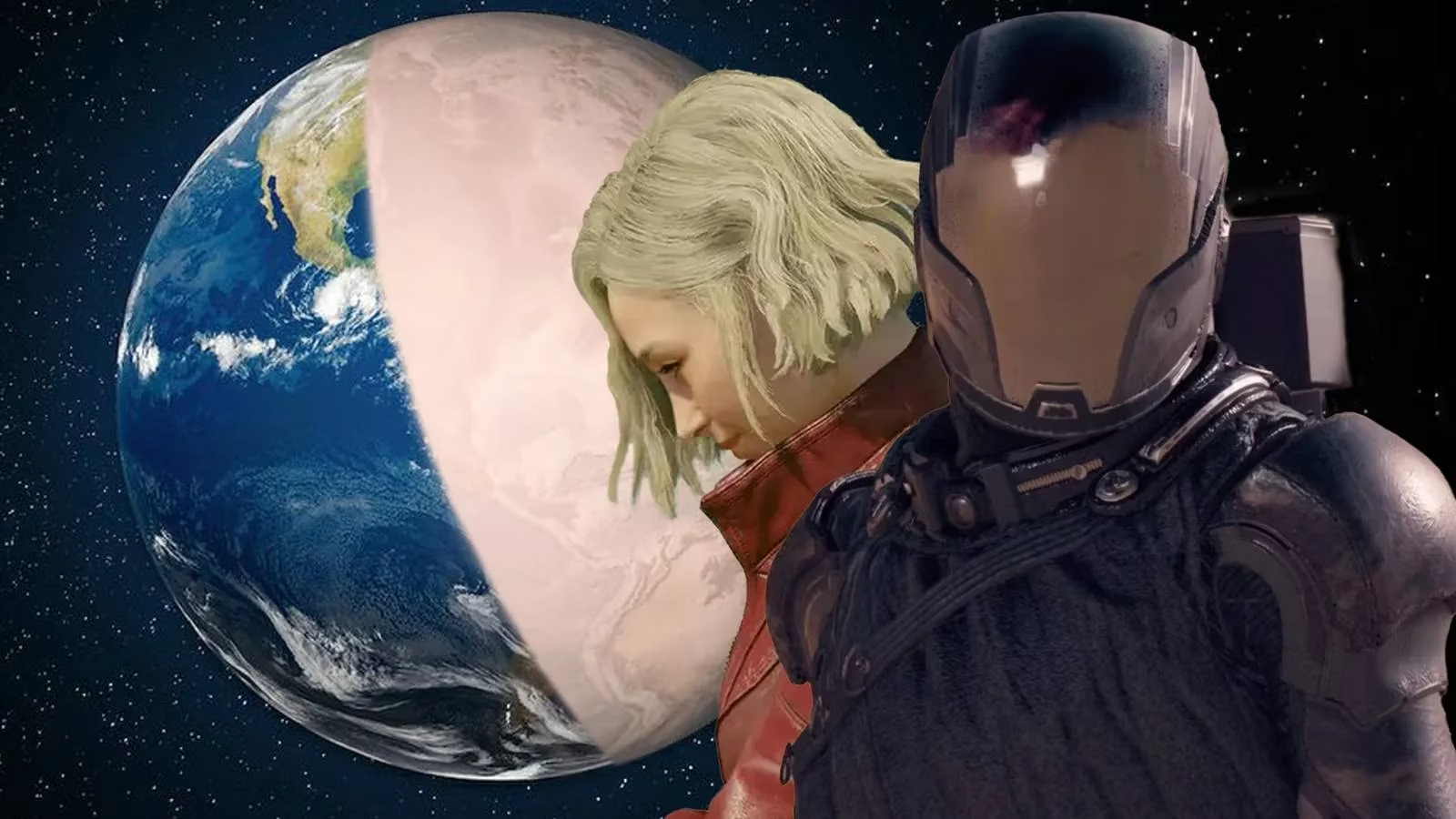
Spoilers ahead, so consider this your fair warning. By the year 2330, when Starfield takes place, Earth is completely uninhabitable. What is left is a vast desert wasteland with a handful of crumbling landmarks poking out of the sand. Humanity has spread across the stars, but the old home world is a ghost. I walked around for a while, just listening to the wind, and I am not gonna lie: it gave me the creeps. There is something deeply unsettling about standing where billions of people used to live and hearing nothing but silence.
The Books That Bring the Past Back
One of my favorite things about exploring Earth is how the game handles its history. You can find books scattered across the Settled Systems, and reading them unlocks points of interest back on Earth. It is a clever little mechanic, and it made me feel like an archaeologist piecing together a lost civilization. Here are a few landmarks I tracked down:
-
🏙️ London’s Shard — a jagged skeleton half-buried in dust.
-
🗽 New York’s Empire State Building — still standing, but only just.
-
🌆 Dubai’s Burj Khalifa — a needle in a very dead haystack.
Each location felt like a punch to the gut. I kept thinking about all the people who used to walk those streets, grab coffee, argue about stupid stuff, and fall in love. Now it is just sand and echoes. The books themselves are tiny time capsules, carried off-world by evacuees who wanted to preserve something. That detail got me. It is one thing to lose a planet; it is another to fight like hell to remember it.
The Unearthed Truth
The main story eventually sends you to Earth during the mission 'Unearthed,' which comes pretty late in the campaign. I had been putting it off because I was busy doing side quests, but when I finally made my way to the NASA Launch Tower in Cape Canaveral, everything clicked. The place is a ruin, but it is also a museum of humanity’s biggest mistake. And let me tell you, the reveal is a bitter pill to swallow.
Earth was deemed uninhabitable in 2203, but the writing was on the wall long before that. The planet’s magnetosphere collapsed, and its atmosphere dissipated into space. The cause? Dr. Victor Aiza, a theoretical physicist and NASA astronaut, discovered an Artifact in the 2100s. That discovery led to the invention of Grav Drive technology in 2138 — the same tech players use for fast travel. Aiza had a warning from another version of himself, a counterpart from a different universe who told him exactly what would happen if he kept pushing. He pushed anyway.
| Year | Event | What It Meant |
|---|---|---|
| 2100s | Dr. Victor Aiza discovers an Artifact | The first domino falls |
| 2138 | Grav Drive is invented | Humanity reaches for the stars |
| 2150 | Scientists announce magnetosphere failure | The clock starts ticking |
| 2199 | Evacuation efforts end | Only a fraction escape |
| 2203 | Earth becomes uninhabitable | Billions die |
A mere twelve years into the experiments, in 2150, scientists announced that the magnetosphere would fail completely in about fifty years. Nations banded together and coordinated a massive evacuation, but it was too little, too late. The evacuation continued until 2199, and only a fraction of the population got out. Billions of people died when Earth finally fell in 2203. That is the long and short of it. No sugarcoating, no happy ending.
Aiza’s Confession and My Own Guilt
What really got under my skin was Aiza’s personal journal. In his final years, he reflected on his decision to pursue science over protecting mankind. He began to doubt whether he had made the right call, and he confessed that another universe’s version of him had warned him about the consequences. Aiza continued regardless, believing it was for 'the benefit of science' and the 'greater good.' He wanted to have his cake and eat it too: unlock the cosmos and save Earth. But the universe does not work that way.
I sat there staring at the screen, feeling weirdly guilty. Every time I fast travel in Starfield, I am using the very technology that doomed Earth. That is a heck of a twist in the tale. Aiza had blood on his hands, no two ways about it, but he was also the reason humanity survived out there among the stars. The game does not let you off the hook easily. It asks a nasty question: would you trade one planet for a thousand? I am still not sure I have an answer.
2026: Mods, Memory, and a Dead World
It is 2026 now, and the modding community is still going strong. I have seen all kinds of creations, but I have not found a mod that makes me feel better about the canon. Sure, you can probably find something that restores Earth’s atmosphere or turns it into a lush paradise, but that is not the story Starfield is telling. In the official lore, there is no way to bring life back to Earth, at least not without mods. And honestly? I think that is the point.
Earth is talked about often in Starfield. Artifacts like those books were taken off-world to preserve some history, and people still argue about what happened. But the planet itself is a cautionary tale. It is a reminder that progress has a price, and sometimes the bill comes due in ways we cannot undo. I will keep visiting that dead world from time to time. Not because it is fun, but because it matters. At the end of the day, Starfield’s Earth is not just a location. It is a mirror, and I cannot look away.
0 Comments