
The Uncertain Future of Starfield 2: Can a Sequel Salvage Bethesda's Space Saga?
Starfield 2 speculation grows as Bethesda faces high expectations, aiming to surpass Shattered Space and rival The Elder Scrolls’ legacy.
As of 2026, the discourse surrounding a potential Starfield 2 persists, a full three years after the original game's launch and following the release of its Shattered Space expansion. Despite the expansion's efforts, Starfield has struggled to cement the enduring legacy and passionate fanbase enjoyed by Bethesda's other flagship franchises, The Elder Scrolls and Fallout. The conversation about a sequel is fueled more by potential than by the unqualified success of the first installment, highlighting a pivotal moment for Bethesda Game Studios as it navigates its future under Microsoft's ownership and rising player expectations.
The Legacy of Shattered Space and Lingering Criticisms
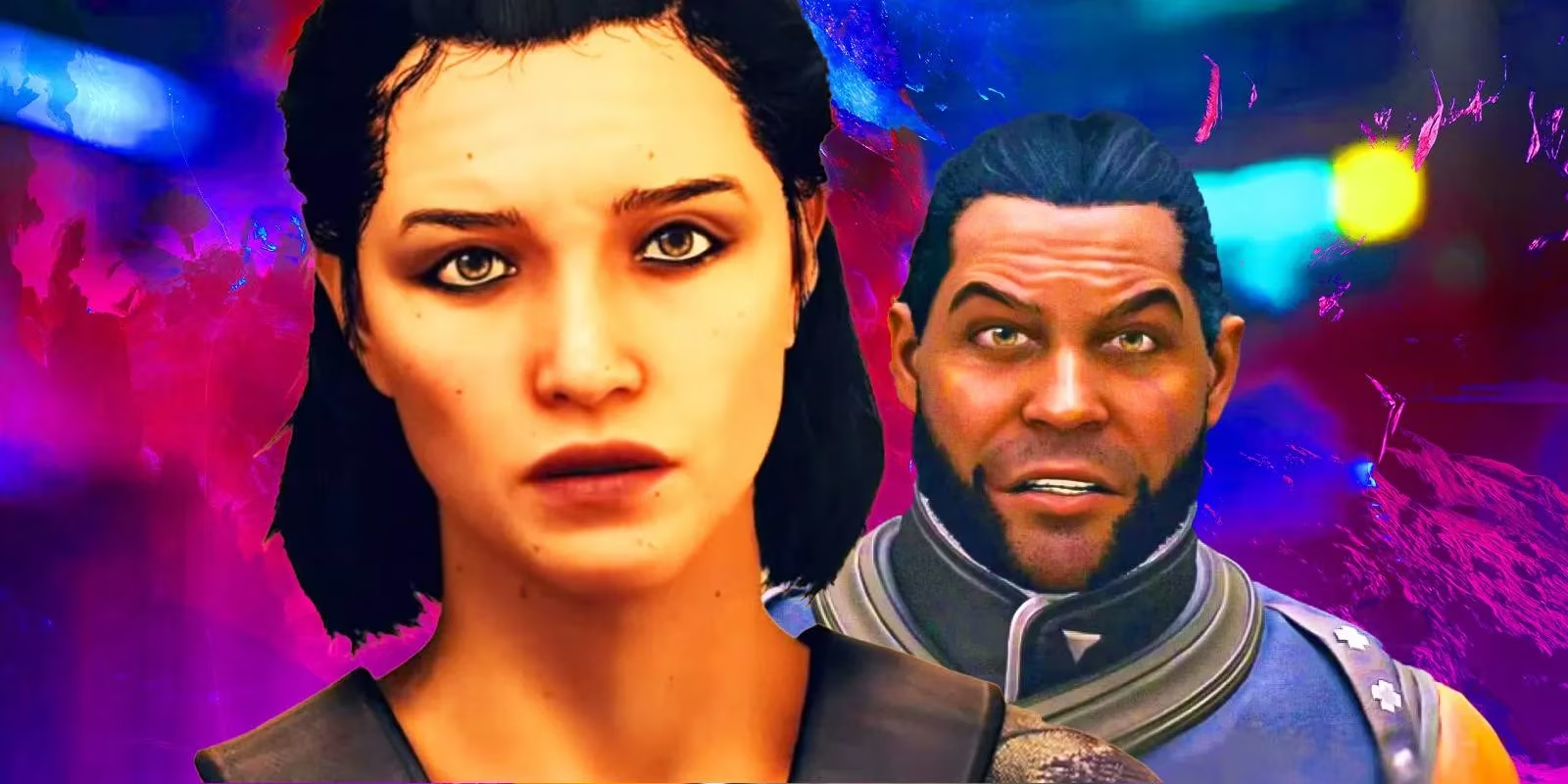
The Shattered Space expansion, intended to elevate Starfield to its pre-launch promised heights, ultimately faced significant challenges. Its core issue was a fundamental one: it delivered more of the same content that had failed to inspire a large portion of the player base initially. While it added new handcrafted environments—a welcome departure from the often bland procedural generation of the base game—it did little to address systemic criticisms.
Key problems from the original release remained largely unaddressed:
-
🪐 Lifeless Planetary Exploration: Many planets continued to feel empty and devoid of meaningful interaction.
-
🛤️ Illusion of Choice: The game's narrative and quest design often funneled players into linear paths, contradicting the promised freedom.
-
⚙️ Lack of Innovative Mechanics: The expansion introduced few, if any, new gameplay systems to refresh the core experience.
From a pure content standpoint, Shattered Space wasn't lacking, offering new weapons, locations, and story elements. However, when compared to the transformative updates seen in other live-service titles—such as CD Projekt Red's overhaul of Cyberpunk 2077 alongside its Phantom Liberty expansion—Bethesda's DLC felt conservative and missed a crucial opportunity for redemption.
The Developer's Perspective: Hope in a Sequel
Former Bethesda developer and Starfield system designer Bruce Nesmith offered a perspective that fuels the Starfield 2 speculation. In an interview, he suggested that many successful franchises don't start with a perfect first game. Instead, they contain "flashes of brilliance" that provide a foundation for exceptional sequels. Nesmith pointed to franchises like Mass Effect and Assassin's Creed, where later entries truly defined the series' legacy.
This analogy positions Starfield as a promising but flawed prototype, with Starfield 2 holding the potential to realize the ambitious vision. The belief is that a sequel could learn from the first game's missteps, refining its vast universe, narrative depth, and gameplay loops into a cohesive and captivating experience.
The Daunting Bethesda Timeline
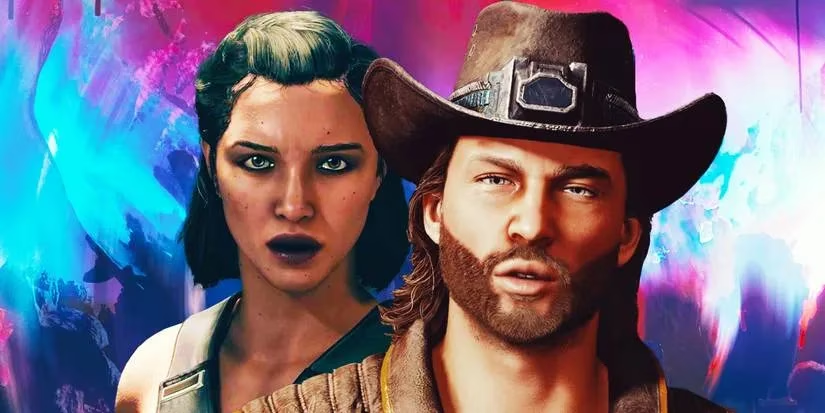
However, the most significant hurdle for Starfield 2 is Bethesda's notoriously long development cycles. The studio's pipeline is already publicly committed, creating a daunting timeline for any sequel:
| Project | Estimated Release Window | Notes |
|---|---|---|
| The Elder Scrolls VI | Late 2020s / Early 2030s | Announced in 2018, likely Bethesda's next major release. |
| Fallout 5 | Post-2030 | High fan demand likely prioritizes it after TES VI. |
| Starfield 2 | 2030s+ | Would follow other major projects, pushing it far into the future. |
This schedule means a sequel is potentially over a decade away. By the time development could seriously begin, the gaming landscape and player expectations will have evolved dramatically, requiring a sequel not just to fix old problems, but to innovate anew.
The Microsoft Factor and Shifting Reputations
A critical new variable is Bethesda's parent company, Microsoft. The tech giant's strategic priorities could directly impact the fate of a Starfield sequel. While The Elder Scrolls and Fallout are established, bankable properties with guaranteed audiences, Starfield lacks that foundational reputation. Microsoft may decide to allocate Bethesda's resources toward expanding those surefire franchises rather than gambling on a second attempt to launch a new IP.
Furthermore, Bethesda's reputation has seen a gradual decline over the past decade:
-
2011: The Elder Scrolls V: Skyrim releases to universal acclaim, becoming a cultural phenomenon. ✅
-
2015: Fallout 4 receives a more mixed response, with criticism aimed at its dialogue system and RPG mechanics. ⚠️
-
2018: Fallout 76 launches in a notoriously poor state, damaging consumer trust. ❌
-
2023: Starfield releases to solid sales but fails to generate sustained excitement or critical reverence. ⚠️
This trend places additional pressure on The Elder Scrolls VI to be a monumental success. If it stumbles, confidence in Bethesda's ability to deliver a stellar Starfield 2 would diminish further.
Conclusion: A Crossroads for Bethesda
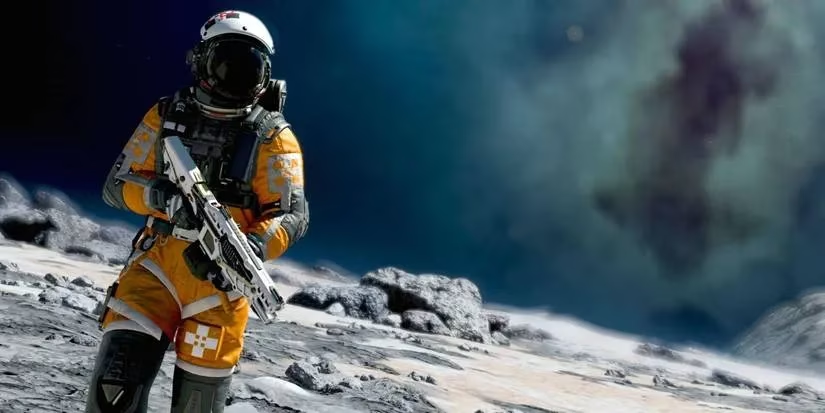
The path to Starfield 2 is fraught with "ifs." If The Elder Scrolls VI is a triumphant return to form. If Microsoft greenlights a sequel for a moderately successful IP. If Bethesda can dramatically accelerate its development pace or overhaul its design philosophy. The notion of "fixing it in the sequel" is a risky strategy, especially when competitors have shown that post-launch support can resurrect a game's fortunes.
Pinning hopes on Starfield 2 might also signal a willingness to move on from the first game, rather than committing to the long-term, No Man's Sky-style redemption arc some players hoped for. Ultimately, the future of the franchise depends on Bethesda recapturing its magic with its next releases. Only then will the demand—and the faith—necessary for a Starfield 2 truly exist. For now, the sequel remains a speculative glimmer in the far reaches of the gaming cosmos, its arrival uncertain and its success far from guaranteed.
0 Comments