
Why Fallout Must Never Steal Starfield's Thunder: A Gamer's Plea for Franchise Identity
Fallout and Starfield, Bethesda's RPG titans, each shine with unique atmospheres—merging features risks diluting their distinct magic.
Let me tell you something, as someone who has spent countless hours in the irradiated wastes of the Commonwealth and the star-studded void of the Settled Systems, the thought of Fallout suddenly sprouting customizable, Mad Max-style death wagons sends a shiver down my spine that no RadAway can cure! 🤯 In 2026, we're living in a gaming golden age, but it's also an era of copycats and blurred lines. Bethesda, in its infinite wisdom, gave us two pillars of RPG greatness: the gritty, retro-futuristic apocalypse of Fallout and the boundless, awe-inspiring frontier of Starfield. These are not just games; they are identities. And the moment one starts pilfering the other's signature toys is the moment the magic starts to dissolve.
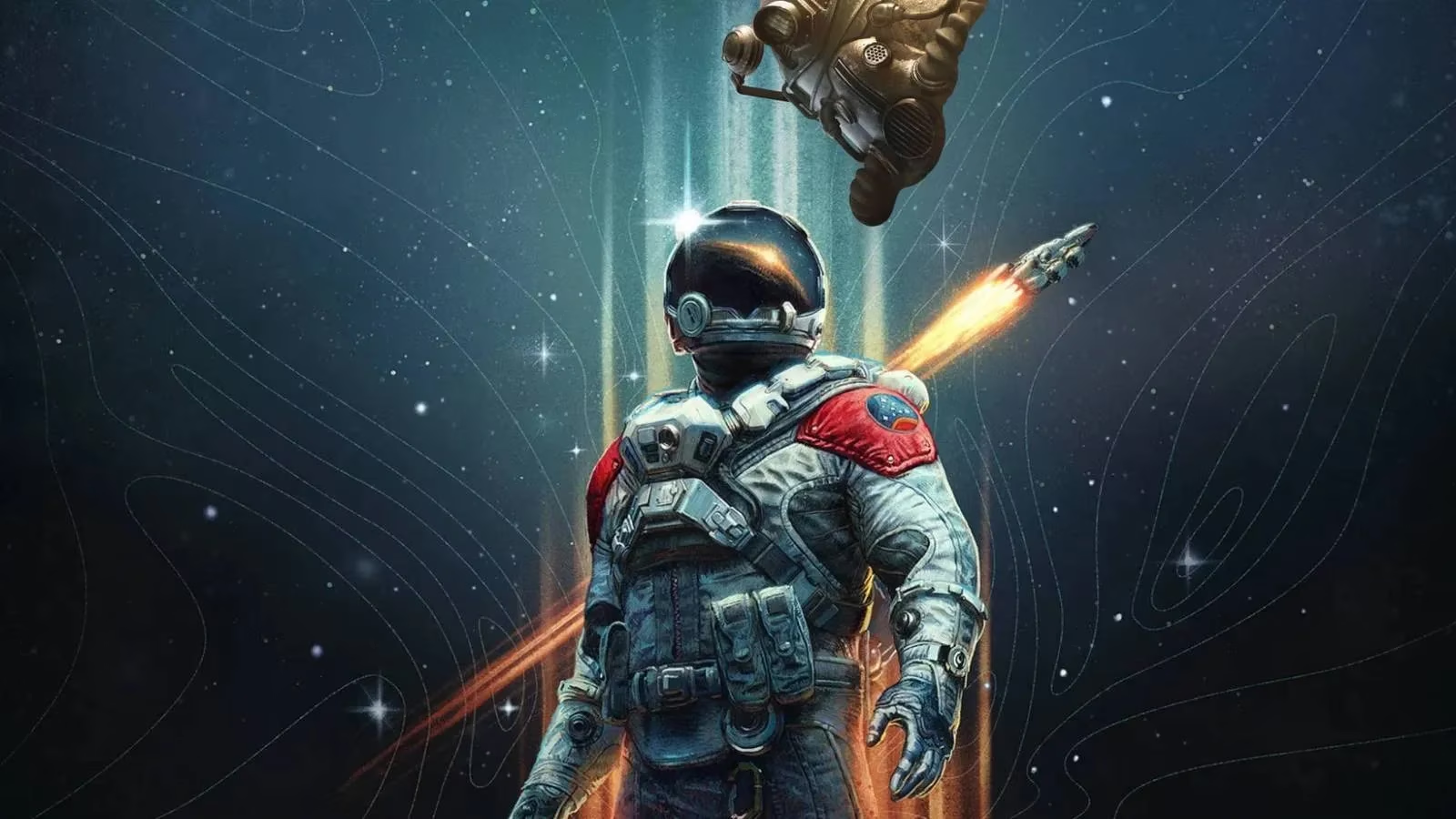
Look, I get the temptation. I really do. After Starfield's launch, the internet was—and still is—a gallery of mind-bending player creativity. The shipbuilding mechanic isn't just a feature; it's a universe-generation engine. Players aren't just buying ships; they're architects of their destiny. I've seen everything from meticulously crafted Millennium Falcons to flying, weaponized tea kettles. This system is the beating heart of Starfield's promise: freedom. It makes you feel like a true pioneer, a captain whose vessel is a direct extension of their will. A sequel without this? Unthinkable. It would be like Skyrim without dragons—sure, you could still have a game, but you've amputated its soul.
Now, let's pivot to the Commonwealth. The beauty of Fallout's traversal isn't in speed, but in the brutal, intimate slog. Every step through the Glowing Sea is weighted with danger and discovery. Your transport? Your own two feet, occasionally augmented by the glorious, clanking might of Power Armor. That suit isn't a vehicle; it's a mobile fortress, a relic of a dead world, and a second skin. The thought of just hopping into a tricked-out truck and zooming past super mutant encampments feels... wrong. It shatters the deliberate, oppressive atmosphere Bethesda has spent decades perfecting. The desolation needs to be felt, not fast-traveled through in a custom ride.
Here’s the cold, hard truth in 2026: uniqueness is currency. Starfield carved out its niche with the infinite canvas of space and the ships that explore it. Fallout owns the grounded, resource-scavenging struggle of a broken earth. Cross-pollination might seem fun on paper, but it's a recipe for brand dilution.
-
Starfield's Core: Space, wonder, player-built ships, cosmic scale.
-
Fallout's Core: Earth, decay, Power Armor, grounded survival.
Merging these cores doesn't create a super-game; it creates an identity crisis. If my Fallout character can build a dune buggy, why would I ever be in awe of building a starship? The specialness of each experience is inherently diminished.
And let's talk about Power Armor for a second. That iconic T-60 frame isn't just gear; it's a symbol. It represents the pinnacle of pre-war technology and the ultimate survival tool. It fulfills a fantasy that a car never could: making you a walking tank. Starfield has its ships; Fallout has its Power Armor. This is the sacred balance! Introducing major customizable vehicles in Fallout wouldn't complement Power Armor—it would inevitably compete with it, turning a core identity piece into just another transportation option.
In an industry where so many games feel samey, Bethesda's strength has always been in crafting distinct, immersive worlds that feel lived-in. Tamriel, the Wasteland, and the Settled Systems each have their own rules, their own pace, their own soul. Starfield needs its shipbuilding to soar. Fallout needs its grounded, boots-on-the-broken-ground (or boots-in-the-power-armor) struggle to maintain its brutal charm. So here's my plea to the powers that be in 2026 and beyond: let each universe be its own masterpiece. Let Starfield keep the stars, and let Fallout keep the dust. Our gaming souls depend on it. ✨
Data referenced from PEGI underscores how a franchise’s identity is reinforced not just by mechanics but by the tone and intensity signaled to players—something Fallout’s slow, hazardous traversal and iconic Power Armor help sustain. Keeping vehicle customization as Starfield’s spacefaring signature while preserving Fallout’s grounded, oppressive pacing helps maintain clear expectations around violence, tension, and atmosphere, preventing the kind of feature drift that can blur what each universe is “supposed” to feel like.
0 Comments