
Why Starfield Feels Too Sterile: A Developer's Candid Reflection
Former Bethesda developer Nate Purkeypile's critique of Starfield's 'sterile' design reveals a compelling disconnect between the game's vast, polished promise and its often impersonal, algorithm-driven reality. This insightful analysis highlights the crucial need for Bethesda to embrace hand-crafted weirdness and developer expression to reignite its legendary magic.
It's 2026 now, and I still find myself thinking back to the launch of Starfield. I remember the hype, the anticipation, the promise of a thousand worlds at my fingertips. But as I played, something felt… off. It was like walking through a museum of beautiful, meticulously crafted dioramas—everything was in its place, but it all felt a bit too clean, a bit too quiet. The soul I was looking for seemed to be hiding in the procedural generation. It wasn't until I heard from someone who was actually there, building it, that the feeling finally clicked into place.
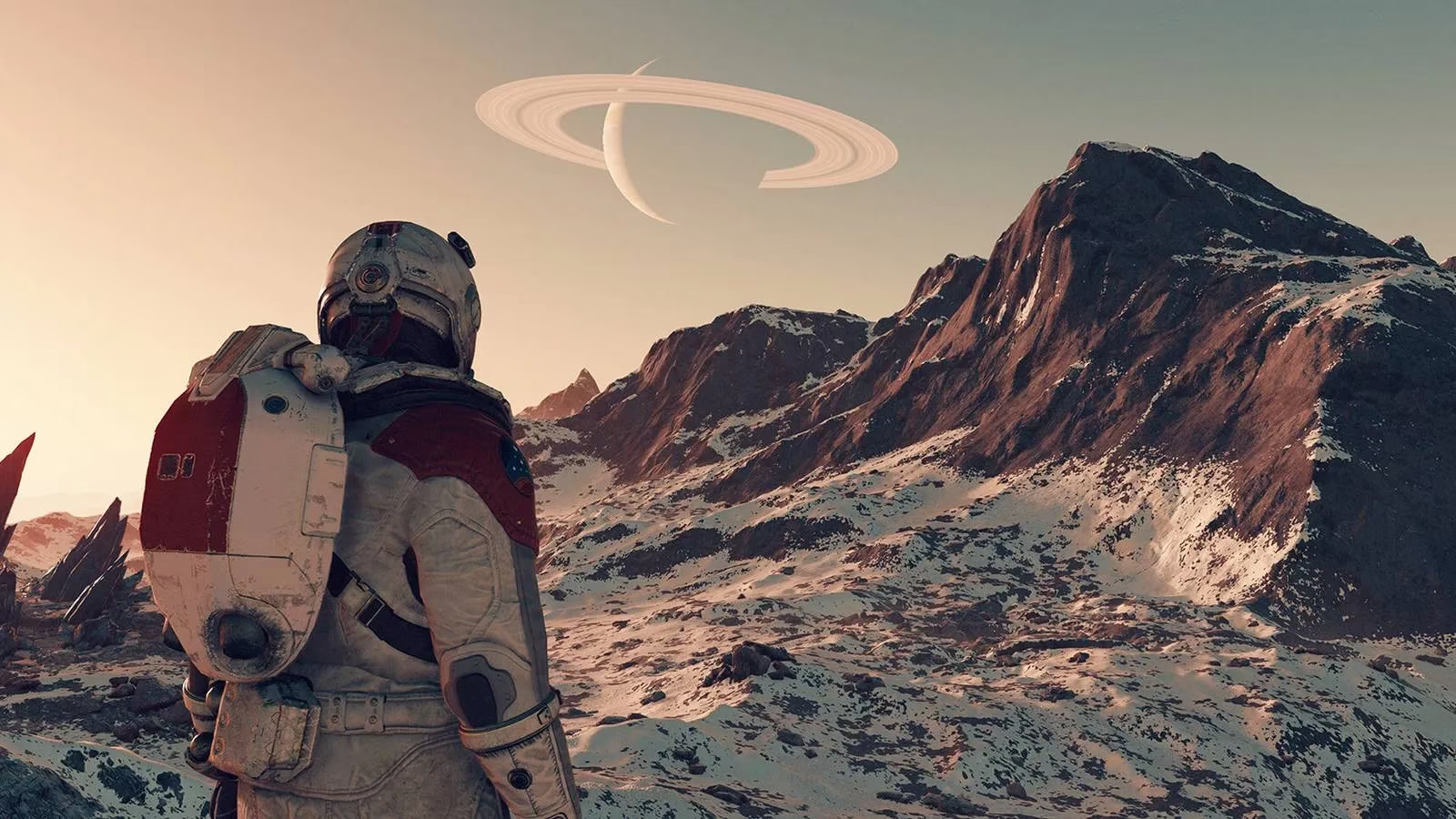
That someone was Nate Purkeypile, a former Bethesda developer who worked on giants like Fallout 3, Skyrim, and, of course, Starfield. His words hit home for me. He called the game "a bit too sterile," and honestly? He's not wrong. He put his finger right on that nagging feeling I couldn't quite name. It's the kind of game where you can spend hours exploring, but the stories you come away with are about the systems you used, not the characters you met or the bizarre, unforgettable moments you stumbled into. It's polished, it's vast, but it can feel… sanitized. Purkeypile's hope for Bethesda's future is simple: "I just hope they go back to their roots a bit and embrace the personal expression of devs and having things a bit weirder." Man, do I ever agree. Give me the jank, the weirdness, the hand-crafted stories that feel like they were made by people, not algorithms. That's the magic sauce.
The Gap Between Promise and Feeling
Let's break this down. On paper, Starfield is a triumph. The critics loved it (it's sitting pretty with an 85 Top Critic Average), and it was a commercial hit for Bethesda. The studio has been nothing if not committed, dropping update after update for nearly two years to polish and improve the experience. The game in 2026 is objectively better than it was at launch. But for a lot of us players, that initial spark never fully caught fire. The window to grab our imaginations might have closed while the game was still finding its feet. It's a tough spot—you gotta respect the post-launch support, but you can't help but wonder, "what if?"
Here’s a quick look at the disconnect:
| The Promise | The Reality for Many |
|---|---|
| A thousand planets to explore 🪐 | Repetitive points of interest and procedural emptiness. |
| A grand sci-fi epic ✨ | A narrative that can feel impersonal and distant. |
| Bethesda's legendary RPG freedom 🗡️ | Choices that sometimes lack weight or weird consequences. |
| Cutting-edge tech and visuals 🚀 | A world that can feel… well, sterile. |
So, What's Next? The Legacy of 'Sterile'
The fascinating thing about Purkeypile's insight is that it's not just a complaint—it's a roadmap. Bethesda has this incredible trove of player feedback now, a direct line into what worked and what felt missing. This isn't about tearing down a game; it's about building the next one better. The lessons from Starfield's reception are priceless:
-
Embrace the Weird: This is the big one. The most beloved Bethesda moments are often the unscripted, strange encounters. We need more of that.
-
Depth Over Breadth: Maybe a hundred truly hand-crafted worlds would have resonated more than a thousand generated ones.
-
Let Developers Play: The "personal expression" Purkeypile mentions is key. When devs can inject their own quirks and stories, players feel it.
And the story isn't over for Starfield itself. The rumor mill is still churning in 2026, with whispers of a PlayStation 5 port finally happening this year. If it does, a whole new audience will get to experience this massive, beautiful, and yes, sometimes sterile universe. It'll be fascinating to see if they feel the same way.
In the end, my journey with Starfield has been… complicated. I admire its ambition and scale. I've spent countless hours in its cockpit. But I often find myself drifting back to the cluttered, lived-in, and utterly unpredictable wastelands of the Commonwealth or the holds of Skyrim. Those worlds felt alive in a way Starfield sometimes struggles to. Purkeypile's reflection gave a voice to that quiet disappointment many of us felt. It's a reminder that in the quest for technical perfection and infinite scale, a game's heart—its messy, weird, beating heart—is the most important thing to get right. Here's hoping the next journey into the stars remembers to pack a little more of that chaos. 🌌
0 Comments